
Healthcare Industry Trends 2026
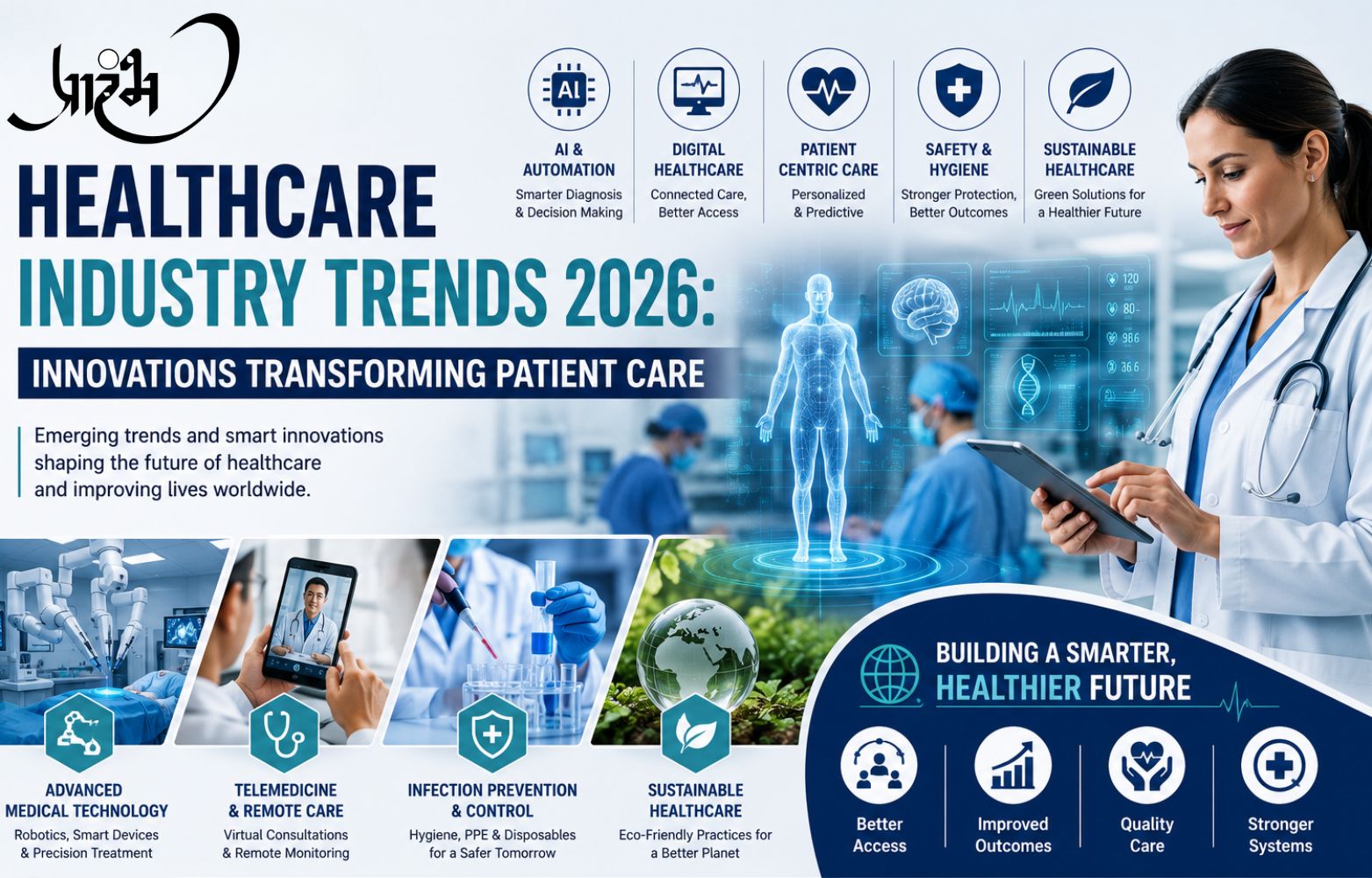
The healthcare industry is evolving faster than ever before. Rapid advancements in medical technology, Artificial Intelligence (AI), digital healthcare, robotics, telemedicine, and smart medical devices are transforming how hospitals, clinics, and healthcare professionals deliver patient care.
The latest Healthcare Industry Trends 2026 are focused on improving patient outcomes, increasing operational efficiency, strengthening infection prevention, and making healthcare services more accessible worldwide. Healthcare providers, manufacturers, medical professionals, and policymakers are embracing innovative technologies to build a smarter, safer, and more connected healthcare ecosystem.
This guide explores the leading healthcare innovations and emerging trends that are reshaping patient care across the globe.
What Are Healthcare Industry Trends?
Healthcare Industry Trends refer to the latest developments, technologies, policies, and innovations that improve healthcare delivery, patient safety, medical treatment, hospital management, and healthcare accessibility.
These trends influence:
- Patient care
- Medical technology
- Healthcare infrastructure
- Hospital operations
- Medical research
- Infection prevention
- Healthcare workforce
- Digital transformation
- Global healthcare systems
Businesses and healthcare organizations that stay updated with these trends remain competitive while delivering better healthcare services.
Why Healthcare Innovation Matters
Healthcare innovation improves both patient experiences and clinical outcomes.
Major benefits include:
- Faster diagnosis
- Better treatment accuracy
- Improved patient safety
- Reduced healthcare costs
- Enhanced hospital efficiency
- Better infection control
- Remote patient monitoring
- Personalized healthcare
- Improved healthcare accessibility
- Data-driven decision making
Innovation is helping healthcare systems respond more effectively to increasing patient demands.
Top Healthcare Industry Trends in 2026
1. Artificial Intelligence Is Revolutionizing Healthcare
Artificial Intelligence has become one of the most influential technologies in modern healthcare.
Healthcare organizations are using AI for:
- Medical imaging
- Disease prediction
- Clinical decision support
- Drug discovery
- Patient monitoring
- Healthcare analytics
- Administrative automation
AI enables healthcare professionals to deliver faster, more accurate, and personalized patient care.
2. Digital Healthcare Is Expanding Rapidly
Digital healthcare technologies are making medical services more accessible.
Popular digital healthcare solutions include:
- Electronic Health Records (EHR)
- Mobile health applications
- Virtual consultations
- Digital prescriptions
- Cloud-based healthcare systems
- Remote diagnostics
Digital transformation improves communication between patients and healthcare providers.
3. Telemedicine Continues to Grow
Telemedicine has become an essential component of modern healthcare.
Benefits include:
- Remote medical consultations
- Better healthcare accessibility
- Reduced travel time
- Continuous patient monitoring
- Faster follow-up care
- Improved rural healthcare access
Telemedicine supports both patients and healthcare professionals through convenient digital communication.
4. Smart Hospitals Are Becoming the New Standard
Healthcare facilities are adopting smart technologies to improve operational efficiency.
Smart hospitals integrate:
- IoT-enabled medical devices
- AI-powered monitoring
- Digital patient records
- Automated medication systems
- Smart diagnostics
- Predictive maintenance
These technologies improve patient safety and hospital performance.
5. Healthcare Cybersecurity Is a Growing Priority
As healthcare becomes increasingly digital, protecting patient information has become essential.
Healthcare organizations are investing in:
- Secure cloud infrastructure
- Multi-factor authentication
- Data encryption
- Cybersecurity monitoring
- Privacy compliance
- Digital risk management
Strong cybersecurity helps protect sensitive medical information.
6. Medical Technology Continues to Advance
Medical technology is improving diagnosis, treatment, and patient recovery.
Innovations include:
- Robotic-assisted surgery
- Wearable medical devices
- Smart diagnostic equipment
- Portable healthcare devices
- AI-powered imaging
- Precision medicine
Advanced technologies improve treatment accuracy while reducing recovery time.
7. Infection Prevention Remains a Global Priority
Healthcare facilities continue strengthening infection prevention measures.
Important practices include:
- Hospital hygiene
- Medical disposable products
- Personal Protective Equipment (PPE)
- Sterilization procedures
- Hand hygiene
- Safe waste management
Effective infection control protects patients, healthcare workers, and visitors.
8. Personalized Patient Care Is Improving Outcomes
Healthcare providers increasingly use personalized treatment approaches based on:
- Medical history
- Lifestyle
- Genetic information
- Diagnostic reports
- Patient preferences
Personalized healthcare improves treatment effectiveness and patient satisfaction.
9. Sustainable Healthcare Is Gaining Momentum
Healthcare organizations are adopting environmentally responsible practices.
Sustainable healthcare initiatives include:
- Energy-efficient hospitals
- Medical waste reduction
- Sustainable procurement
- Eco-friendly healthcare products
- Digital documentation
Sustainability supports both environmental protection and operational efficiency.
10. Healthcare Workforce Development
Healthcare organizations continue investing in skilled professionals.
Areas of focus include:
- Digital healthcare training
- Medical technology education
- Leadership development
- Clinical skill enhancement
- Continuous professional learning
A well-trained workforce is essential for delivering high-quality patient care.
Emerging Medical Technologies Transforming Patient Care
Several technologies continue to shape the future of healthcare.
These include:
- Artificial Intelligence
- Machine Learning
- Robotics
- Internet of Medical Things (IoMT)
- Big Data Analytics
- Cloud Computing
- Blockchain
- 3D Printing
- Augmented Reality
- Virtual Reality
These innovations improve diagnosis, treatment planning, and patient engagement.
Benefits of Healthcare Innovation
Healthcare innovation supports:
Better Patient Outcomes
Advanced technologies improve treatment success.
Faster Diagnosis
AI and digital imaging enable earlier disease detection.
Improved Hospital Efficiency
Automation reduces administrative workload.
Better Healthcare Access
Telemedicine reaches patients in remote locations.
Enhanced Patient Safety
Digital monitoring improves clinical decision-making.
Challenges Facing the Healthcare Industry
Healthcare organizations continue to address several challenges.
These include:
- Rising healthcare costs
- Workforce shortages
- Cybersecurity threats
- Regulatory compliance
- Technology adoption
- Aging populations
- Data privacy
- Healthcare accessibility
Addressing these challenges requires continuous innovation and collaboration.
Future of Healthcare Industry
The future of healthcare will focus on:
- Artificial Intelligence
- Predictive healthcare
- Precision medicine
- Smart hospitals
- Connected healthcare
- Preventive healthcare
- Digital diagnostics
- Personalized treatment
- Sustainable healthcare
- Global healthcare collaboration
These innovations will continue transforming patient care worldwide.
Best Practices for Healthcare Organizations
Healthcare providers should:
- Invest in digital transformation
- Adopt AI-powered healthcare solutions
- Strengthen cybersecurity
- Improve infection prevention
- Train healthcare professionals
- Enhance patient engagement
- Modernize hospital infrastructure
- Use data-driven decision making
- Promote preventive healthcare
- Focus on continuous innovation
Conclusion
Healthcare Industry Trends 2026 demonstrate how innovation, technology, and digital transformation are reshaping patient care worldwide. Artificial Intelligence, telemedicine, smart hospitals, medical technology, personalized treatment, and infection prevention are creating a more efficient and patient-centered healthcare system.
Healthcare organizations that embrace these innovations can improve clinical outcomes, strengthen operational efficiency, enhance patient safety, and remain competitive in the rapidly evolving global healthcare industry.
Frequently Asked Questions (FAQs)
1. What are Healthcare Industry Trends?
Healthcare Industry Trends are the latest developments, technologies, and practices that improve patient care, hospital operations, healthcare accessibility, and medical innovation.
2. Why are Healthcare Industry Trends important?
They help healthcare organizations improve patient outcomes, increase efficiency, reduce costs, strengthen infection prevention, and adopt modern medical technologies.
3. How is Artificial Intelligence transforming healthcare?
AI supports medical imaging, disease prediction, clinical decision-making, patient monitoring, healthcare analytics, and administrative automation.
4. What is Digital Healthcare?
Digital Healthcare uses technologies such as Electronic Health Records, mobile applications, cloud systems, telemedicine, and digital diagnostics to improve healthcare delivery.
5. What are Smart Hospitals?
Smart Hospitals integrate Artificial Intelligence, IoT, automation, digital records, and connected medical devices to improve patient care and hospital efficiency.
6. Why is Telemedicine becoming more popular?
Telemedicine improves healthcare accessibility by enabling remote consultations, continuous patient monitoring, faster follow-ups, and convenient medical care.
7. What role does Medical Technology play in patient care?
Medical technology improves diagnosis, treatment accuracy, surgical precision, patient monitoring, and recovery through advanced healthcare solutions.
8. Why is Infection Prevention important in healthcare?
Effective infection prevention protects patients and healthcare professionals while reducing healthcare-associated infections and improving hospital safety.
9. What challenges does the Healthcare Industry face?
Major challenges include rising healthcare costs, workforce shortages, cybersecurity risks, regulatory compliance, technology adoption, and increasing patient demand.
10. What is the future of Healthcare?
The future of healthcare includes Artificial Intelligence, personalized medicine, smart hospitals, connected healthcare, preventive care, sustainable healthcare, digital diagnostics, and advanced medical technologies that improve patient outcomes and healthcare accessibility.