
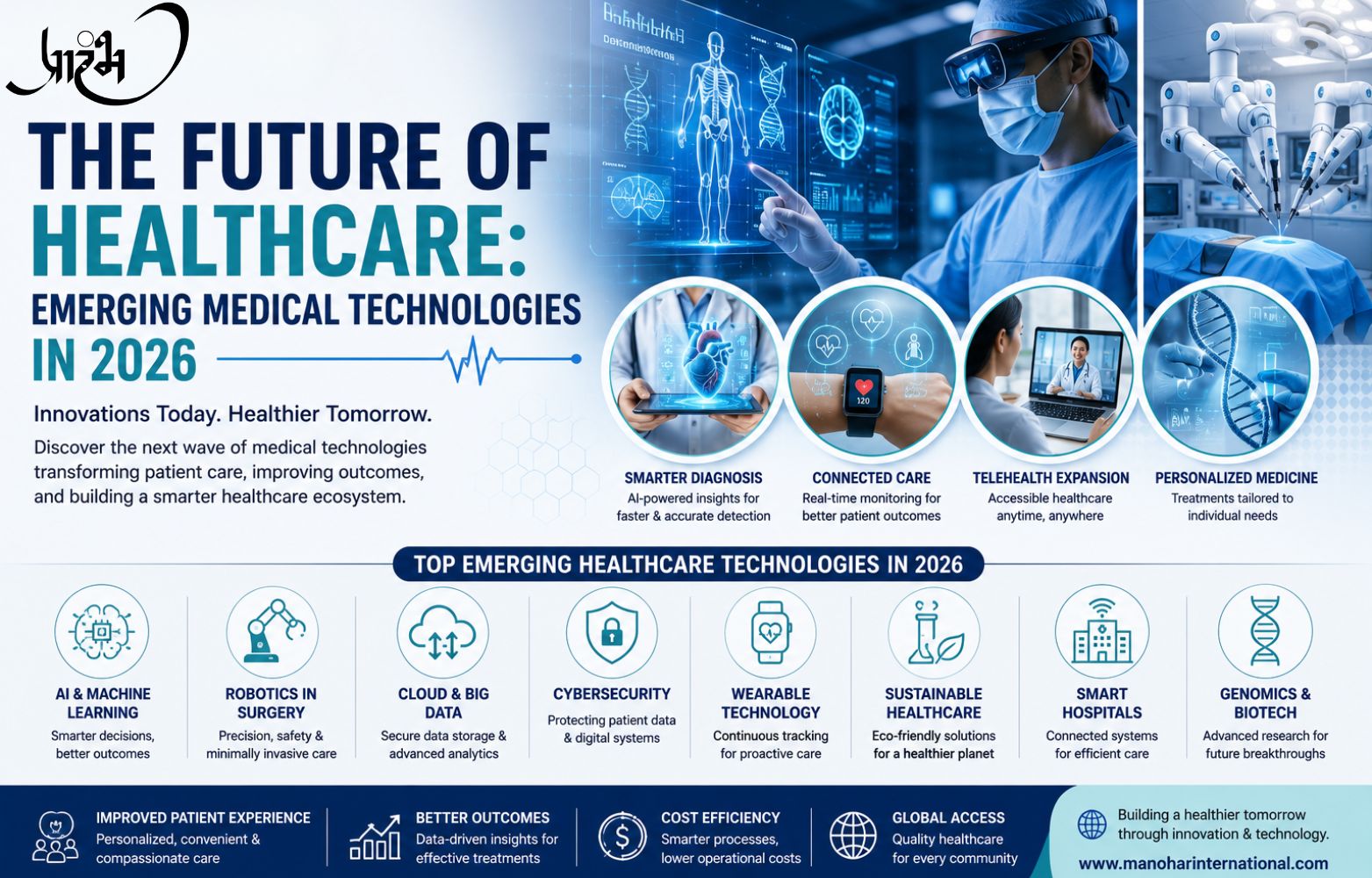
The future of healthcare is being shaped by rapid advancements in medical technology, Artificial Intelligence (AI), robotics, digital healthcare, connected medical devices, and precision medicine. Hospitals, healthcare providers, medical manufacturers, and research organizations are adopting innovative technologies that improve patient outcomes, increase operational efficiency, and enhance healthcare accessibility.
In 2026, emerging medical technologies are transforming every stage of patient care—from early diagnosis and disease prevention to treatment, recovery, and long-term health management. These innovations are creating smarter healthcare systems that are more connected, data-driven, and patient-focused.
This guide explores the latest healthcare innovations and how they are transforming the future of patient care worldwide.
What Is the Future of Healthcare?
The Future of Healthcare refers to the integration of advanced technologies, digital transformation, smart medical devices, Artificial Intelligence, and data-driven healthcare systems that improve patient outcomes and hospital performance.
Future healthcare focuses on:
- Personalized patient care
- Early disease detection
- Digital healthcare
- Connected hospitals
- Remote patient monitoring
- Preventive healthcare
- Sustainable healthcare
- Smart diagnostics
- Medical automation
- Healthcare accessibility
Healthcare organizations worldwide continue investing in innovation to deliver safer and more efficient medical services.
Why Emerging Medical Technologies Matter
Modern healthcare technologies provide significant benefits for patients, healthcare professionals, and medical institutions.
Key advantages include:
- Faster diagnosis
- Improved treatment accuracy
- Better patient outcomes
- Reduced healthcare costs
- Enhanced patient safety
- Increased operational efficiency
- Remote healthcare access
- Better infection prevention
- Smarter decision-making
- Higher quality healthcare services
Technology is making healthcare more efficient, accessible, and patient-centered.
Top Emerging Medical Technologies in 2026
1. Artificial Intelligence in Healthcare
Artificial Intelligence has become one of the most transformative technologies in modern medicine.
Healthcare providers use AI for:
- Medical imaging analysis
- Disease prediction
- Clinical decision support
- Patient monitoring
- Drug discovery
- Healthcare analytics
- Administrative automation
AI enables faster diagnosis while supporting healthcare professionals with accurate clinical insights.
2. Smart Medical Devices
Connected medical devices are improving patient monitoring and disease management.
Examples include:
- Smart heart monitors
- Wearable health trackers
- Blood glucose monitoring devices
- Connected blood pressure monitors
- Portable diagnostic equipment
- Smart infusion pumps
These devices provide real-time health data that supports personalized patient care.
3. Telemedicine and Virtual Healthcare
Telemedicine continues to improve healthcare accessibility by connecting patients with healthcare professionals remotely.
Benefits include:
- Online consultations
- Remote diagnosis
- Virtual follow-up appointments
- Rural healthcare access
- Continuous patient monitoring
- Faster medical advice
Digital healthcare platforms continue to expand globally.
4. Robotics in Healthcare
Medical robotics are transforming surgical procedures and hospital operations.
Applications include:
- Robotic-assisted surgery
- Rehabilitation robotics
- Hospital automation
- Medication dispensing
- Laboratory automation
Robotics improve surgical precision while reducing recovery time.
5. Internet of Medical Things (IoMT)
The Internet of Medical Things connects healthcare devices through secure digital networks.
IoMT supports:
- Real-time patient monitoring
- Connected hospitals
- Smart healthcare systems
- Emergency response
- Predictive maintenance
- Healthcare analytics
Connected medical devices improve clinical efficiency and patient safety.
6. Precision Medicine
Precision medicine delivers personalized treatment based on individual patient characteristics.
Healthcare providers consider:
- Genetics
- Lifestyle
- Medical history
- Environmental factors
- Diagnostic reports
This approach improves treatment effectiveness while minimizing unnecessary interventions.
7. Advanced Medical Imaging
Modern imaging technologies continue improving disease diagnosis.
Innovations include:
- AI-assisted radiology
- 3D medical imaging
- Digital pathology
- Smart diagnostic software
- High-resolution imaging systems
Earlier diagnosis often leads to better patient outcomes.
8. Digital Health Records
Electronic Health Records (EHR) improve healthcare coordination.
Benefits include:
- Faster information sharing
- Better clinical decisions
- Reduced paperwork
- Improved patient history management
- Better treatment continuity
Digital records support efficient healthcare delivery.
9. Healthcare Cybersecurity
As healthcare becomes more digital, protecting patient information becomes increasingly important.
Healthcare organizations invest in:
- Secure cloud platforms
- Data encryption
- Multi-factor authentication
- Network security
- Compliance management
- Cybersecurity monitoring
Strong cybersecurity protects confidential medical data.
10. Sustainable Healthcare Technologies
Healthcare organizations continue adopting environmentally responsible technologies.
Examples include:
- Energy-efficient hospitals
- Smart resource management
- Eco-friendly medical products
- Medical waste reduction
- Green healthcare infrastructure
Sustainability supports long-term healthcare development.
How Medical Technology Is Improving Patient Care
Modern medical technologies are helping healthcare providers deliver:
Faster Diagnosis
AI-powered diagnostic systems detect diseases earlier.
Better Treatment Planning
Digital healthcare platforms support clinical decision-making.
Remote Patient Monitoring
Healthcare professionals monitor patients without requiring frequent hospital visits.
Improved Surgical Outcomes
Robotic-assisted procedures improve precision and reduce complications.
Better Patient Experience
Digital communication improves healthcare accessibility and convenience.
Emerging Healthcare Trends in 2026
Several trends continue shaping the future of healthcare.
These include:
- Artificial Intelligence
- Machine Learning
- Smart Hospitals
- Predictive Analytics
- Connected Medical Devices
- Remote Healthcare
- Precision Medicine
- Digital Therapeutics
- Healthcare Automation
- Sustainable Healthcare
Healthcare organizations adopting these innovations remain competitive while improving patient outcomes.
Challenges in Healthcare Innovation
Despite rapid technological advancement, healthcare providers continue facing several challenges.
These include:
- High implementation costs
- Data privacy concerns
- Cybersecurity risks
- Regulatory compliance
- Technology integration
- Workforce training
- Digital infrastructure
- Healthcare accessibility
Addressing these challenges requires collaboration between governments, healthcare providers, and technology companies.
Best Practices for Healthcare Organizations
Healthcare organizations should:
- Invest in digital transformation
- Adopt Artificial Intelligence responsibly
- Improve cybersecurity
- Modernize hospital infrastructure
- Train healthcare professionals
- Strengthen infection prevention
- Focus on patient-centered care
- Improve healthcare accessibility
- Monitor emerging technologies
- Promote continuous innovation
The Future of Healthcare Beyond 2026
Healthcare will continue evolving through:
- AI-assisted diagnostics
- Smart hospitals
- Personalized medicine
- Connected healthcare ecosystems
- Predictive healthcare
- Robotic surgery
- Digital therapeutics
- Remote monitoring
- Sustainable healthcare systems
- Advanced biotechnology
These innovations will redefine healthcare delivery and improve global health outcomes.
Conclusion
The Future of Healthcare is being driven by emerging medical technologies, digital transformation, Artificial Intelligence, connected healthcare systems, and patient-centered innovation. Healthcare providers adopting these technologies can improve diagnosis, treatment, operational efficiency, and patient satisfaction while preparing for future healthcare challenges.
As medical technology continues advancing, hospitals, healthcare professionals, manufacturers, and policymakers must embrace innovation to build a smarter, safer, and more accessible healthcare ecosystem for future generations.
Frequently Asked Questions (FAQs)
1. What is the Future of Healthcare?
The Future of Healthcare focuses on using advanced medical technologies, Artificial Intelligence, digital healthcare, and connected healthcare systems to improve patient care and healthcare efficiency.
2. What are Emerging Medical Technologies?
Emerging Medical Technologies include Artificial Intelligence, robotics, wearable medical devices, smart diagnostics, precision medicine, telemedicine, and connected healthcare systems.
3. How is Artificial Intelligence transforming healthcare?
AI supports disease prediction, medical imaging, patient monitoring, healthcare analytics, drug discovery, and clinical decision-making.
4. What are Smart Medical Devices?
Smart Medical Devices are connected healthcare tools that monitor patient health, collect medical data, and support real-time healthcare management.
5. What is Telemedicine?
Telemedicine allows patients to consult healthcare professionals remotely through secure digital communication platforms.
6. How does Robotics improve patient care?
Robotics enhances surgical precision, reduces recovery time, improves rehabilitation, and automates hospital operations.
7. Why is Precision Medicine important?
Precision Medicine provides personalized treatment based on genetics, lifestyle, medical history, and diagnostic information, improving treatment effectiveness.
8. What is the Internet of Medical Things (IoMT)?
IoMT connects medical devices through secure digital networks, enabling real-time monitoring, data sharing, and smarter healthcare management.
9. What challenges does healthcare technology face?
Healthcare innovation faces challenges including cybersecurity risks, implementation costs, regulatory compliance, workforce training, and digital infrastructure development.
10. How can healthcare organizations prepare for the future?
Healthcare organizations should invest in digital transformation, Artificial Intelligence, cybersecurity, workforce training, connected medical technologies, patient-centered care, and sustainable healthcare practices to remain competitive and improve healthcare delivery.