
Global Discovery in Smart Manufacturing
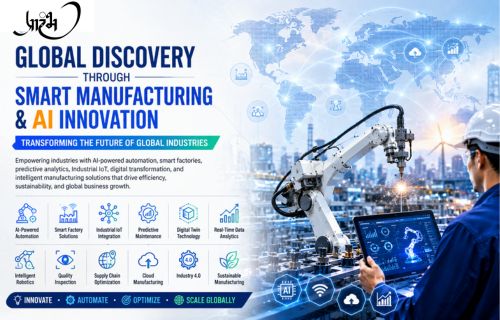
The world is entering a new era where Smart Manufacturing and Artificial Intelligence (AI) are transforming industries, reshaping global trade, and creating new business opportunities. As businesses embrace digital transformation, Global Discovery has become more than exploring international markets—it is about discovering innovative technologies, intelligent manufacturing processes, and sustainable solutions that drive long-term business growth.
From advanced robotics and intelligent automation to AI-powered quality control and predictive analytics, modern manufacturing is becoming faster, smarter, and more efficient. Companies that invest in these technologies are improving productivity, reducing costs, strengthening global supply chains, and delivering higher-quality products to customers worldwide.
What Is Global Discovery in Smart Manufacturing?
Global Discovery is the process of identifying new technologies, emerging markets, innovative manufacturing practices, and international business opportunities that help organizations remain competitive in an increasingly connected world.
Smart Manufacturing combines advanced technologies such as Artificial Intelligence, the Internet of Things (IoT), Machine Learning, Robotics, Cloud Computing, and Data Analytics to create intelligent production systems capable of making real-time decisions. These technologies enable manufacturers to optimize operations, reduce downtime, improve product quality, and respond quickly to changing market demands.
As industries become increasingly digital, businesses must continuously discover new innovations that support operational excellence and global competitiveness.
The Rise of Smart Manufacturing
Manufacturing has evolved from labor-intensive production lines to highly automated, data-driven factories. Smart Manufacturing enables machines, systems, and people to work together through connected technologies that improve efficiency across the entire production process.
Key characteristics of Smart Manufacturing include:
- Intelligent automation
- Real-time production monitoring
- Predictive maintenance
- Connected factory systems
- Digital twins
- AI-driven quality inspection
- Robotics and collaborative robots
- Cloud-based manufacturing platforms
- Data-driven decision making
- Sustainable production practices
These technologies reduce production errors, improve consistency, and allow manufacturers to respond quickly to customer demands.
Artificial Intelligence: Driving Manufacturing Innovation
Artificial Intelligence has become one of the most valuable technologies in modern manufacturing. AI systems analyze large volumes of production data, identify patterns, predict equipment failures, and recommend improvements before problems occur.
Applications of AI in manufacturing include:
- Predictive maintenance
- Automated quality inspection
- Production planning
- Inventory optimization
- Supply chain forecasting
- Demand prediction
- Intelligent robotics
- Process automation
- Energy management
- Customer demand analysis
By integrating AI into manufacturing operations, companies can increase productivity, improve operational efficiency, and reduce waste while maintaining consistent product quality.
Industry 4.0 and Connected Factories
Industry 4.0 represents the fourth industrial revolution, where digital technologies connect every aspect of manufacturing. Smart factories use sensors, connected devices, cloud computing, and AI to monitor production in real time.
Features of Industry 4.0 include:
- Internet of Things (IoT)
- Artificial Intelligence
- Big Data Analytics
- Cloud Manufacturing
- Cybersecurity
- Digital Supply Chains
- Autonomous Robots
- Smart Sensors
- Augmented Reality
- Digital Twin Technology
These innovations allow manufacturers to create highly flexible production systems capable of adapting to changing customer requirements while minimizing operational costs.
Smart Manufacturing and Global Business Growth
Modern manufacturers are no longer competing only in local markets. Businesses are serving customers across continents through efficient supply chains and digital manufacturing technologies.
Smart Manufacturing helps companies:
- Improve production efficiency
- Reduce manufacturing costs
- Deliver products faster
- Expand into international markets
- Enhance customer satisfaction
- Strengthen supply chain resilience
- Support global trade
- Improve regulatory compliance
- Increase profitability
- Build long-term competitiveness
Organizations adopting digital manufacturing technologies are better prepared to meet global demand while maintaining high standards of quality and sustainability.
Sustainability Through Intelligent Manufacturing
Sustainability has become an essential part of modern manufacturing. Businesses are reducing environmental impact while improving operational efficiency through smart technologies.
Sustainable manufacturing initiatives include:
- Energy-efficient production
- Waste reduction
- Circular economy practices
- Renewable energy integration
- Eco-friendly materials
- Water conservation
- Carbon footprint reduction
- Green supply chains
- Responsible sourcing
- Sustainable packaging
AI-powered analytics help manufacturers monitor resource consumption and identify opportunities for continuous improvement.
Global Opportunities for Manufacturers
Countries worldwide are investing heavily in advanced manufacturing infrastructure, creating opportunities for exporters, suppliers, OEM manufacturers, distributors, and technology providers.
High-growth sectors include:
- Medical devices
- Healthcare products
- Disposable medical supplies
- Beauty and wellness products
- Consumer goods
- Automotive manufacturing
- Electronics
- Industrial automation
- Food processing
- Sustainable packaging
Businesses that combine Smart Manufacturing with AI Innovation can respond more effectively to changing customer needs while expanding into global markets.
Challenges in Digital Manufacturing
Despite its many advantages, Smart Manufacturing also presents several challenges that businesses must address.
Common challenges include:
- High implementation costs
- Cybersecurity risks
- Workforce skill development
- Technology integration
- Data privacy
- Equipment modernization
- Change management
- Regulatory compliance
Organizations that invest in employee training, cybersecurity, and digital infrastructure are better positioned to overcome these challenges.
Future Trends in Smart Manufacturing
The future of manufacturing will continue to evolve through innovation and digital transformation. Several technologies are expected to reshape global industries over the next decade.
Future trends include:
- AI-powered autonomous factories
- Human-robot collaboration
- Digital twins
- 5G-enabled manufacturing
- Edge computing
- Blockchain in supply chains
- Sustainable smart factories
- Predictive manufacturing analytics
- Personalized production
- Intelligent logistics
These innovations will improve productivity, increase flexibility, and create new global business opportunities.
Why Global Discovery Matters
Global Discovery encourages businesses to explore new technologies, international partnerships, and innovative manufacturing models that support long-term growth. Companies that embrace AI, automation, and digital transformation are better prepared to compete in the rapidly evolving global economy.
By continuously discovering emerging technologies and market opportunities, businesses can strengthen their competitive advantage, improve operational resilience, and build sustainable international success.
Conclusion
Global Discovery through Smart Manufacturing and AI Innovation is transforming industries across the world. Intelligent automation, artificial intelligence, robotics, and digital technologies are creating smarter factories, stronger supply chains, and more sustainable production systems. Businesses that invest in these innovations today will be well-positioned to lead tomorrow’s global manufacturing landscape. As technology continues to evolve, Global Discovery will remain the key to unlocking new opportunities, driving international business growth, and building a smarter, more connected future.
Frequently Asked Questions (FAQs)
1. What is Global Discovery in Smart Manufacturing?
Global Discovery refers to identifying emerging technologies, innovative manufacturing practices, and international business opportunities that help companies grow globally.
2. How does Artificial Intelligence improve manufacturing?
AI enhances manufacturing by enabling predictive maintenance, automated quality control, production optimization, demand forecasting, and intelligent decision-making.
3. What is Industry 4.0?
Industry 4.0 is the integration of digital technologies such as AI, IoT, robotics, cloud computing, and data analytics into manufacturing processes to create smart factories.
4. Why is Smart Manufacturing important for global business?
Smart Manufacturing improves efficiency, product quality, supply chain performance, sustainability, and competitiveness, enabling businesses to expand into international markets.
5. What are the future trends in Smart Manufacturing?
Future trends include autonomous factories, AI-powered robotics, digital twins, 5G manufacturing, blockchain supply chains, predictive analytics, and sustainable production systems.