
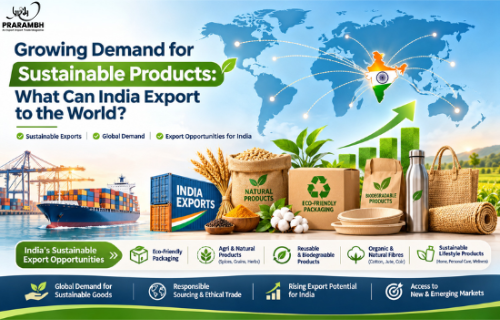
Sustainability is becoming an important consideration for consumers, manufacturers and international buyers. Businesses across the world are looking for products that reduce environmental damage, use natural or renewable resources, generate less waste and support responsible production.
This has created new export opportunities for Indian businesses, particularly SMEs and merchant exporters.
India has a strong advantage because of its agricultural resources, traditional industries, natural fibers, handicrafts and growing organic product sector.
But what exactly are sustainable products? Which sustainable products are exported from India? And what opportunities can Indian exporters explore in international markets?
Let’s understand.
- What Are Sustainable Products?
Sustainable products are goods that are manufactured, processed, packaged or used in ways that minimize their negative impact on the environment.
These products generally have one or more of the following characteristics:
- Made from natural, renewable or recycled materials.
- Biodegradable or compostable under suitable conditions.
- Manufactured using environmentally responsible processes.
- Reusable, recyclable or designed to reduce waste.
- Require fewer natural resources during production or use.
- Support responsible farming and ethical sourcing.
Example: A shopping bag made from jute is a sustainable alternative to a conventional single-use plastic bag because jute is a natural, renewable fibre.
However, a natural product is not automatically sustainable. Its production methods, transportation, processing and disposal also matter.
- List of Sustainable Products Exported from India
India produces and exports several products that have sustainable characteristics. Some major categories are listed below.
| No. | Sustainable Product | Why Is It Sustainable? |
| 1 | Jute Bags and Products | Made from natural, renewable jute fiber; reusable and biodegradable under suitable conditions. |
| 2 | Organic Cotton Products | Produced using certified organic farming practices. |
| 3 | Coir and Coco Peat | Made from coconut husk, an agricultural by-product; used in gardening and horticulture. |
| 4 | Bamboo Products | Bamboo is a renewable resource used for household products, furniture and handicrafts. |
| 5 | Organic Spices | Produced under certified organic farming systems with restrictions on synthetic inputs. |
| 6 | Organic Tea and Coffee | Grown under organic farming standards and supplied to specialised international buyers. |
| 7 | Handmade Paper Products | Can use recycled paper or agricultural fibers, reducing dependence on virgin wood pulp. |
| 8 | Areca Leaf Plates and Bowls | Made from naturally fallen areca palm leaves and used as alternatives to conventional disposable tableware. |
| 9 | Coir Mats and Rugs | Made from coconut fiber and used in homes, hotels and commercial spaces. |
| 10 | Recycled Textile Products | Made using recovered fabric, textile waste or recycled fibers. |
| 11 | Organic Rice and Millets | Produced under organic certification systems and supplied to health-conscious food markets. |
| 12 | Wooden Handicrafts | Can be sustainable when made using legally sourced wood and responsible forestry practices. |
| 13 | Natural Fiber Bags | Made from materials such as cotton, jute and other plant-based fibers. |
| 14 | Natural Essential Oils | Plant-derived products used in cosmetics, personal care and wellness industries. |
| 15 | Reusable Stainless Steel Products | Durable alternatives to disposable plastic products, including bottles, lunch boxes and kitchenware. |
Important export perspective: These are examples of sustainable product categories, not an official ranking of India’s largest sustainable exports. Their sustainability depends on sourcing, production methods, certifications and lifecycle impact.
- Which Sustainable Products Have Strong Export Potential?
Indian exporters can explore the following categories based on India’s existing production and export capabilities.
- Organic Agricultural Products
India exports organic cereals, millets, processed food, oilseeds, spices, tea and coffee.
According to APEDA’s National Programme for Organic Production (NPOP), India exported approximately 368,155 metric tons of certified organic products worth US$665.97 million in FY 2024–25.
The leading categories by export value included:
- Cereals and millets – US$161.67 million
- Processed food – US$154.01 million
- Medicinal plant products – US$88.57 million
- Spices and condiments – US$45.42 million
- Tea – US$45.13 million
These figures demonstrate opportunities for exporters dealing in certified organic products.
- Natural Fiber and Textile Products
Jute bags, cotton textiles, handloom products, coir mats and natural fiber products have applications in retail, fashion, home furnishing and hospitality.
India exported approximately US$400 million worth of jute products in FY 2024–25. Cotton textile exports were approximately US$12.3 billion during the same year. However, conventional cotton textiles should not automatically be classified as sustainable without supporting production and sourcing credentials.
- Eco-Friendly Household and Lifestyle Products
Indian manufacturers can explore export opportunities for:
- Bamboo kitchenware and home décor.
- Areca leaf plates and bowls.
- Reusable shopping bags.
- Handmade paper stationery.
- Coir-based gardening products.
- Recycled fabric bags and accessories.
Potential buyers include supermarkets, wholesalers, hotel suppliers, eco-friendly product distributors and lifestyle retailers.
- Which International Markets Can Indian Exporters Explore?
Some potential markets for sustainable products from India include:
| Country/Region | Potential Products |
| USA | Organic food, cotton products, bamboo products |
| Germany | Organic spices, textiles, natural fibers |
| UK | Jute bags, organic food, eco-friendly household products |
| Netherlands | Coir products, organic food, sustainable textiles |
| UAE | Natural fiber products, organic food, reusable household products |
| Australia | Organic agricultural products, coir and gardening products |
| Japan | Bamboo products, organic tea, handmade products |
These are potential market opportunities, not confirmed rankings of import demand. Exporters should research country-specific regulations, buyer requirements and applicable certifications before approaching buyers.
- What Should Indian Exporters Check Before Exporting Sustainable Products?
- Certifications: Check requirements such as India Organic/NPOP, NOP (USA), EU Organic or other applicable certifications.
- Product quality: Ensure consistent quality, specifications and packaging.
- Environmental claims: Avoid unsupported claims such as 100% eco-friendly or biodegradable.
- Import regulations: Check destination-country rules, labelling and product safety requirements.
- Buyer requirements: Understand the buyer’s sustainability standards and sourcing expectations.
Conclusion
Sustainable products are creating new opportunities in international trade. India has considerable potential because of its agricultural resources, natural fibres, traditional manufacturing skills and growing organic sector.
For Indian exporters, sustainable products offer opportunities across food, textiles, handicrafts, household products and horticulture.
The key is to identify products with genuine environmental benefits, obtain the required certifications, maintain quality and connect with international buyers looking for responsible sourcing.
Sustainability is not just an environmental responsibility; it is also an emerging opportunity for Indian exporters to expand into global markets.
FAQs
- What are sustainable products?
Sustainable products are goods made, processed or used in ways that reduce environmental impact through renewable materials, responsible production, and reuse or recycling.
- Which sustainable products can India export?
India can export jute bags, organic spices, organic tea, organic coffee, coir products, bamboo products, areca leaf tableware, recycled textiles and handmade paper products.
- Are organic products considered sustainable?
Generally, organic products follow farming standards that restrict certain synthetic agricultural inputs. However, organic certification alone does not guarantee that every aspect of production is environmentally sustainable.
- Which countries import sustainable products from India?
Potential markets include the USA, Germany, UK, Netherlands, UAE, Australia and Japan. Demand and import requirements vary by product.
- Do sustainable products require special export certification?
Some products require specific certifications depending on their category and destination market. Organic food, for example, may require recognised organic certification. Other environmental claims may need supporting evidence.