
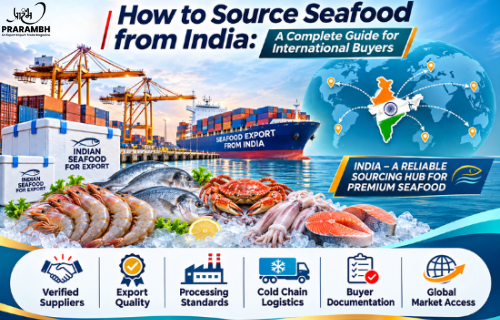
India is one of the important seafood-producing and exporting countries in the world. With a long coastline, inland fisheries, aquaculture farms and established seafood-processing facilities, India offers international buyers a wide range of seafood products.
From frozen shrimp and fish to squid, cuttlefish, crab and dried seafood, Indian suppliers cater to different international markets, including the USA, China, Japan, Vietnam, European countries and the Middle East.
For international importers, wholesalers, seafood distributors, supermarket chains, hotels and food-processing companies, sourcing seafood from India can provide access to competitive prices, multiple product varieties and established processing capabilities.
However, buying seafood internationally requires careful attention to product quality, processing standards, cold-chain management, certifications and import regulations.
This seafood sourcing guide from India explains the major products available, sourcing locations, supplier selection, quality checks and export documentation that international buyers should understand before placing an order.
- What Seafood Products Can Buyers Source from India?
India offers a variety of seafood products for international markets. Buyers can source seafood in fresh, chilled, frozen, dried, salted, processed and value-added forms.
The major seafood products available from India include:
| Seafood category | Products available |
| Shrimp and prawns | Vannamei shrimp, Black Tiger shrimp, Scampi |
| Marine fish | Tuna, Mackerel, Sardines, Ribbonfish, Pomfret |
| Freshwater fish | Rohu, Catla, Pangasius |
| Cephalopods | Squid and Cuttlefish |
| Crustaceans | Crab and Lobster |
| Other seafood | Octopus, Clams, Mussels and Oysters |
| Processed seafood | Fish fillets, breaded shrimp, fish fingers, dried fish and canned seafood |
Frozen shrimp is India’s leading seafood export product. During FY 2024–25, India exported approximately 741,529 metric tons of frozen shrimp, earning around US$5.18 billion.
- Which Indian States Are Important for Seafood Sourcing?
International buyers can approach seafood suppliers and processing companies across India’s coastal states.
Some important sourcing regions are:
- Andhra Pradesh: A major centre for aquaculture and shrimp farming. Buyers can source Vannamei shrimp, fish and processed seafood.
- Gujarat: Known for marine fish, shrimp, squid, cuttlefish and other seafood products. Veraval, Porbandar and Mangrol are important fishing and seafood-processing centres.
- Kerala: Offers prawns, sardines, mackerel, tuna, squid, cuttlefish and other marine products.
- Tamil Nadu: Important for shrimp, crab, tuna, squid and other marine seafood.
- Maharashtra: Offers pomfret, mackerel, prawns, squid and other marine fish.
- Odisha and West Bengal: Important sourcing regions for shrimp, freshwater fish, marine fish and crab.
- Karnataka: Known for mackerel, sardines, shrimp and other marine products.
Buyers should select a sourcing location based on the seafood species, availability, processing facilities, transportation and proximity to the export port.
- Who Can Buy Seafood from India?
Indian seafood suppliers cater to different types of international buyers, including:
- Seafood importers: Companies importing frozen shrimp, fish, squid and other seafood in bulk.
- Wholesalers and distributors: Businesses supplying seafood to local markets, retailers and restaurants.
- Supermarket chains: Buyers requiring packaged, frozen and ready-to-cook seafood.
- Hotels and restaurants: Businesses purchasing prawns, fish fillets, lobster and other seafood.
- Food-processing companies: Manufacturers using seafood as an ingredient in ready-to-eat and ready-to-cook products.
- Seafood trading companies: Businesses purchasing seafood for resale in domestic and international markets.
Small and medium-sized buyers can also approach Indian seafood exporters for trial orders, subject to their minimum order quantities and product availability.
- How to Find Reliable Seafood Suppliers in India?
Finding the right seafood supplier is one of the most important steps in international sourcing.
Buyers can identify Indian seafood suppliers through the following channels:
- MPEDA: The Marine Products Export Development Authority provides information about India’s marine products export sector and registered exporters.
- Trade fairs and exhibitions: Visit international seafood exhibitions and buyer-seller meetings to connect with Indian seafood exporters.
- B2B platforms: Search for Indian seafood suppliers on Alibaba, IndiaMART, TradeIndia, Chamber of Commerce, Trade Connect, MPEDA, and other business-to-business platforms.
- Seafood export associations: Contact industry associations and export promotion organizations for supplier references.
- Direct factory enquiries: Approach seafood processing companies and exporters directly to understand their products, processing capacity and export experience.
- What Quality Standards Should Buyers Check Before Purchasing?
Seafood is a perishable product. Even a small mistake in handling, storage or transportation can affect its quality and safety.
Before confirming an order, international buyers should check the following:
- Product specifications: Confirm the seafood species, size, weight, grade, origin and product form.
- Freshness: Check appearance, smell, texture and other species-specific quality parameters.
- Processing hygiene: Ensure that the processing facility follows proper sanitation and food-safety procedures.
- Temperature control: Confirm that frozen seafood is maintained at the agreed storage temperature, commonly -18°C or below.
- Microbiological testing: Request relevant test reports for pathogens and other microbiological parameters.
- Chemical testing: Check for antibiotic residues, heavy metals and other contaminants as required by the destination market.
- Packaging: Confirm food-grade packaging, labeling, net weight, batch number and production and expiry dates.
- Traceability: Ask for information about the fishing or farming source, processing batch and production facility.
Buyers should also request samples and third-party inspection wherever necessary.
- What Certifications and Documents Are Required for Seafood Exports from India?
Seafood exports require compliance with Indian export regulations and the importing country’s food-safety requirements.
Important registrations, certificates and documents may include:
| Registration / Document | Purpose |
| IEC | Import Export Code issued by DGFT for export business |
| MPEDA Registration | Registration applicable to marine product exporters and other regulated seafood entities |
| EIC / EIA Approval | Relevant approval and inspection requirements for export-oriented seafood establishments and products |
| Health Certificate | Certifies compliance with applicable importing-country health requirements |
| HACCP Certification | Demonstrates a systematic approach to identifying and controlling food-safety hazards |
| Certificate of Origin | Identifies the country where the seafood originates |
| Commercial Invoice | Provides product description, quantity and transaction value |
| Packing List | Gives details of packages, weights and packing |
| Bill of Lading | Transport document issued for sea shipments |
| Test Reports | Provide results of required laboratory tests |
The exact certificates depend on the seafood product, processing method and destination country. For example, the European Union, USA and Japan may have different establishment approval, testing, labeling and health certification requirements.
An exporter should confirm the latest requirements with MPEDA, the Export Inspection Council (EIC), the relevant Export Inspection Agency (EIA) and the buyer before shipment.
- How Does the Seafood Sourcing and Purchasing Process Work?
International buyers should follow a systematic sourcing process to avoid quality and payment-related problems.
- Identify the product: Decide whether you require shrimp, fish, crab, squid or another seafood product.
- Finalize specifications: Mention the species, size, grade, processing style, packaging and required quantity.
- Shortlist suppliers: Contact multiple Indian seafood exporters and compare their quotations.
- Verify the supplier: Check MPEDA registration, approved processing facilities, exports experience and destination-market approvals.
- Request samples: Evaluate product quality, appearance, texture, and packaging and laboratory reports.
- Negotiate prices: Discuss the price, payment terms, Incoterms, delivery schedule and minimum order quantity.
- Arrange inspection: Conduct product inspection and verify the required certificates before shipment.
- Plan transportation: Frozen seafood is generally shipped in refrigerated containers (reefer containers) with appropriate temperature monitoring.
A written purchase agreement should clearly mention product specifications, quality standards, rejection conditions and delivery responsibilities.
- Which Countries Import Seafood from India?
India supplies seafood to several international markets. According to MPEDA’s FY 2024–25 export data, the USA, China, the European Union, Southeast Asia and Japan were among its major destinations.
Some important markets for Indian seafood include:
| Country / Region | Major sourcing opportunities |
| USA | Frozen shrimp, fish and value-added seafood |
| China | Shrimp, fish, squid and cuttlefish |
| European Union | Shrimp, fish fillets, squid and cuttlefish |
| Japan | Shrimp, tuna and other marine products |
| Vietnam | Shrimp, fish and other seafood |
| UAE and Middle East | Frozen fish, shrimp and processed seafood |
| South Korea | Shrimp, squid and other marine products |
The latest MPEDA figures show that India’s seafood exports reached a record ₹73,890.46 crore (US$8.46 billion) in FY 2025–26, with exports of approximately 19.72 lakh metric tons. Frozen shrimp continued to be the leading export product.
However, buyers should check the latest import duties, food-safety requirements, establishment approvals and country-specific restrictions before importing.
Conclusion
India offers significant opportunities for international buyers looking to source seafood products at competitive prices. Its extensive coastline, aquaculture farms, seafood-processing facilities and established export network make it an important sourcing destination.
From Vannamei shrimp and Black Tiger prawns to fish, squid, cuttlefish and crab, buyers can explore multiple seafood categories from Indian suppliers.
However, successful seafood sourcing from India depends on selecting reliable exporters, verifying processing facilities, maintaining cold-chain standards and complying with international food-safety regulations.
For importers, wholesalers, distributors, hotels and food-processing companies, India can be a valuable long-term sourcing partner when quality, traceability and regulatory compliance are given priority.
Frequently Asked Questions (FAQs)
- What is the major seafood products exported from India?
India mainly exports frozen shrimp, frozen fish, squid, cuttlefish, crab, dried seafood and value-added seafood products. Frozen shrimp is the largest export category.
- Which Indian state is best for sourcing seafood?
Andhra Pradesh is an important shrimp-sourcing centre. Gujarat, Kerala, Tamil Nadu, Maharashtra, Odisha and West Bengal are also important seafood sourcing regions.
- How can international buyers find seafood suppliers in India?
Buyers can find suppliers through MPEDA’s exporter directory, seafood trade fairs, B2B platforms, industry associations and direct enquiries to Indian seafood-processing companies.
- Is MPEDA registration mandatory for seafood exporters in India?
Yes. Registration with MPEDA is mandatory for commercial marine product exporters, subject to applicable statutory provisions and exemptions.
- What is the most important quality requirement when importing frozen seafood?
Maintaining the cold chain is essential. Buyers should ensure appropriate freezing, storage and transportation temperatures, along with microbiological and chemical safety checks as required by the destination market.
- Which countries are the biggest buyers of Indian seafood?
The USA and China are among India’s largest seafood export markets, followed by the European Union, Southeast Asia and Japan.