

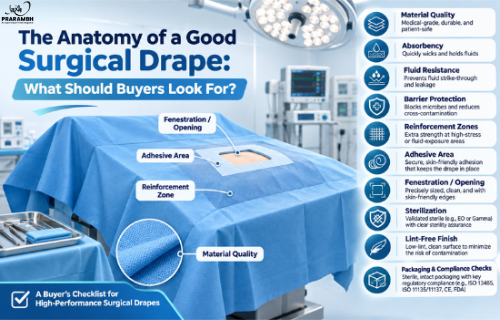
A surgical drape may look like a simple piece of fabric, but it plays an important role in maintaining hygiene and preventing contamination during surgical procedures. It creates a protective barrier between the patient, healthcare professionals and the operating environment.
For hospitals, clinics, medical distributors and bulk procurement teams, choosing the right surgical drape is essential. A poor-quality drape may tear easily, allow fluid penetration or fail to provide adequate protection.
So, what makes a good surgical drape, and what should healthcare buyers check before purchasing?
This guide explains the important features of a quality surgical drape and the specifications buyers should consider before placing bulk orders.
1. Material Quality: The Foundation of a Good Surgical Drape
The material determines the strength, comfort and protective performance of a surgical drape.
Common materials include:
- Non-Woven Fabric: Widely used because it is lightweight, disposable and suitable for single-use medical applications.
- SMS Fabric (Spunbond-Meltblown-Spunbond): Provides a combination of strength, softness and barrier protection.
- Spunlace Fabric: Offers a soft texture and good absorbency for selected medical applications.
What should buyers check?
- Fabric quality and consistency.
- Strength and resistance to tearing.
- Suitability for the intended surgical procedure.
- Compliance with applicable medical textile standards.
The right material should provide protection without restricting the movement of medical professionals.
2. Barrier Protection against Fluids and Contamination
One of the most important functions of a surgical drape is to create a barrier against fluids and potential contaminants.
During surgery, drapes may come into contact with blood, saline and other body fluids.
What should buyers look for?
- Resistance to liquid penetration.
- Appropriate barrier performance.
- Protection in critical areas.
- Consistent quality across the entire drape.
For procedures involving significant fluid exposure, buyers should consider reinforced or specially designed drapes.
SEO/AEO Insight: A good surgical drape should provide reliable fluid barrier protection according to the requirements of the intended medical procedure.
3. Absorbency and Fluid Management
Not every surgical procedure requires the same level of absorbency.
Some procedures involve limited fluid exposure, while others require additional fluid management.
A good surgical drape should help manage fluids without compromising its protective function.
Buyers should check:
- Absorbent zones, where required.
- Reinforced areas around the surgical site.
- Ability to retain fluids.
- Resistance to leakage.
For example, a surgical drape used during an orthopedic procedure may require different fluid-management features compared with one used for a minor outpatient procedure.
4. Strength, Durability and Tear Resistance
A surgical drape must remain intact throughout the procedure.
Weak fabric can tear during positioning, handling or movement, increasing the risk of compromising the sterile field.
Buyers should evaluate:
- Tensile strength.
- Tear resistance.
- Seam strength, where applicable.
- Resistance to damage during handling.
A good surgical drape should maintain its structural integrity during normal use.
5. Correct Size, Shape and Design
Surgical drapes are available in different sizes and designs depending on the procedure.
Some common types include:
- General Surgical Drapes: Used for different surgical applications.
- Fenestrated Drapes: Have an opening that exposes the specific surgical site.
- Ophthalmic Drapes: Designed for eye-related procedures.
- Orthopedic Drapes: Designed to support specific orthopaedic surgical requirements.
- C-Section Drapes: Specially designed for caesarean procedures.
What should buyers check?
- Correct dimensions.
- Appropriate fenestration size and position.
- Compatibility with the intended procedure.
- Reinforced sections, where required.
- Ease of positioning and handling.
The right design helps healthcare professionals work efficiently while maintaining the sterile field.
6. Sterility and Packaging Standards
Sterility is a critical consideration when purchasing surgical drapes intended for sterile procedures.
Buyers should verify:
- Whether the product is supplied sterile or non-sterile.
- Validated sterilization method, where applicable.
- Sterilization records and supporting documentation.
- Package integrity.
- Batch number and manufacturing details.
- Expiry date and storage instructions.
Sterile surgical drapes should remain protected from contamination until the packaging is opened.
7. Comfort and Ease of Handling
Although protection is the primary purpose, handling and usability also matter.
A good surgical drape should be:
- Lightweight and easy to position.
- Soft enough for appropriate patient contact.
- Designed to minimize unnecessary movement.
- Easy for healthcare professionals to unfold and apply.
- Compatible with the procedure’s requirements.
For example, a poorly designed drape may take longer to position or require repeated adjustments during preparation.
8. Certifications, Testing and Regulatory Compliance
For hospitals, distributors and international medical buyers, documentation is as important as the product itself.
Before purchasing surgical drapes, buyers should ask suppliers for relevant documents, such as:
- Product technical specifications.
- Material and performance test reports.
- ISO 13485 quality management certification, where applicable.
- ISO 10993 biocompatibility evidence, where relevant to the intended contact.
- EN 13795 compliance evidence, where applicable to surgical gowns and drapes.
- Sterilization validation documents for sterile products.
- Applicable regulatory registrations and declarations.
Requirements differ depending on the product, intended use and destination country.
GEO SEO Insight: Healthcare buyers in India, Europe, the USA, the Middle East and other international markets should verify the regulatory requirements applicable in their respective markets before importing surgical drapes.
9. A Buyer’s Checklist before Placing a Bulk Order
Before finalizing a supplier, procurement teams should compare products using the following checklist.
| Quality parameter | What to verify |
| Material | Non-woven fabric and GSM |
| Barrier protection | Fluid resistance |
| Strength | Tensile and tear resistance |
| Absorbency | Fluid management requirements |
| Design | Size, shape and fenestration |
| Sterility | Sterile or non-sterile supply |
| Packaging | Individual packaging and batch details |
| Compliance | Applicable standards and test reports |
| Supplier | Manufacturing consistency and reliability |
Buyers should also request samples, review technical specifications and conduct product evaluations before confirming large-volume orders.
Conclusion: How to Identify a Good Surgical Drape
A good surgical drape is more than just a protective sheet. It combines material quality, barrier protection, strength, absorbency, suitable design, sterility and regulatory compliance.
For hospitals, clinics, medical distributors and international healthcare buyers, selecting the right surgical drape can support infection prevention practices, improve operating-room efficiency and ensure consistent product performance.
The key takeaway for healthcare buyers: Never select surgical drapes based on price alone. Evaluate their material, performance, intended application, certifications and supplier reliability before making a procurement decision.
Understanding these factors helps buyers make informed purchasing decisions and identify quality surgical drape manufacturers and suppliers in India and global markets.
Frequently Asked Questions (FAQs)
Q1. What is a surgical drape used for?
A surgical drape is used to cover the patient and surrounding areas during surgery. It helps establish and maintain a protective sterile field and reduces the risk of contamination.
Q2. Which material is best for surgical drapes?
SMS non-woven fabric is commonly used because it offers a combination of strength and barrier properties. However, the best material depends on the surgical procedure and required protection level.
Q3. Are all surgical drapes waterproof?
No. Different surgical drapes offer different levels of fluid resistance. Buyers should check the manufacturer’s fluid penetration and barrier performance test reports.
Q4. What is the difference between sterile and non-sterile surgical drapes?
Sterile surgical drapes undergo a validated sterilization process and are intended for applications requiring sterility. Non-sterile drapes have not undergone that process and should only be used where permitted by their intended application.
Q5. What certifications should buyers check when purchasing surgical drapes?
Buyers should check relevant ISO 13485, ISO 10993 and EN 13795 documentation, wherever applicable, along with destination-market regulatory requirements.
Q6. What should hospitals check before purchasing surgical drapes in bulk?
Hospitals should evaluate material quality, fluid resistance, dimensions, strength, sterility, packaging, technical documentation and supplier consistency.
Q7. Can surgical drapes be customized?
Yes. Manufacturers may offer customized sizes, fenestrations, absorbent areas, reinforcement and packaging depending on the product design and buyer requirements.