
Disposable Surgical Gown
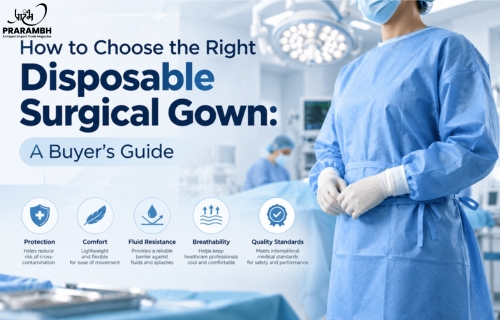
Choosing the right disposable surgical gown is important for hospitals, clinics, laboratories, surgical centers and healthcare distributors. A suitable gown should provide the required level of protection while allowing healthcare professionals to work comfortably.
What Is a Disposable Surgical Gown?
A disposable surgical gown is a single-use protective garment worn by healthcare professionals during surgical and medical procedures. It helps reduce the transfer of contaminants between healthcare workers, patients and the surrounding environment.
Disposable gowns are commonly manufactured from non-woven materials such as spunbond, SMS or SMMS fabric, depending on the required level of protection.
How to Choose the Right Disposable Surgical Gown
- Select the Right Material
Material affects the gown’s strength, breathability, liquid resistance and comfort.
- Spunbond: Lightweight and suitable for lower-risk applications.
- SMS/SMMS: Provides a balance of protection, strength and breathability.
- Laminated materials: Suitable when greater resistance to fluids is required.
The material should be selected according to the procedure and expected exposure to fluids.
- Check Fluid Resistance
For surgical and medical procedures where exposure to blood, body fluids or other liquids is possible, fluid resistance is an important buying criterion.
Buyers should check the manufacturer’s technical specifications and applicable performance standards rather than selecting a gown based only on fabric thickness.
- Consider the Gown’s Design
A good surgical gown should allow healthcare professionals to move comfortably while providing adequate coverage.
Important features include:
- Full-body coverage
- Secure neck and waist ties
- Comfortable cuffs
- Reliable stitching or sealing
- Appropriate sleeve length
- Easy donning and removal
- Choose the Correct Size
Disposable surgical gowns are generally available in sizes such as M, L, XL and XXL, although sizing varies by manufacturer.
Healthcare buyers should check the manufacturer’s size chart and garment dimensions before placing a bulk order.
- Check Standards and Compliance
For medical use, buyers should verify the applicable standards, certifications, test reports and regulatory requirements for the destination market.
Depending on the intended use and market, requirements may relate to:
- Barrier performance
- Microbial cleanliness
- Biocompatibility
- Flammability
- Sterility, where applicable
- Packaging and labeling
For export buyers, compliance requirements can differ between countries, so the manufacturer’s documentation should be reviewed before purchase.
- Consider Packaging and Sterility
For sterile surgical applications, buyers should confirm whether the gown is sterile or non-sterile and how it is packaged.
Packaging should protect the gown from contamination during transportation and storage. Buyers should also check sterilization method, shelf life and storage conditions where applicable.
- Evaluate Comfort and Breathability
Healthcare professionals may wear gowns for extended periods. A gown that is excessively hot or uncomfortable can affect usability.
For longer procedures, buyers should consider:
- Breathable fabric
- Lightweight construction
- Comfortable cuffs
- Suitable fit
- Adequate freedom of movement
Disposable Surgical Gown Buying Checklist
Before placing a bulk order, healthcare buyers should confirm:
| Buying Factor | What to Check |
| Material | Spunbond, SMS, SMMS or laminated |
| Protection | Required fluid/barrier protection |
| Size | Garment dimensions and size range |
| Design | Cuffs, ties, coverage and stitching |
| Sterility | Sterile or non-sterile |
| Compliance | Applicable standards and test reports |
| Packaging | Individual or bulk packaging |
| Customization | Size, GSM, packing and private label |
| Supplier | Manufacturing capability and documentation |
Conclusion
Choosing the right disposable surgical gown requires a balance of protection, material, comfort, size, design, compliance and cost. Hospitals, clinics, laboratories and healthcare distributors should first identify the intended application and then select the gown specification accordingly.
For bulk procurement and international sourcing, buyers should also verify product specifications, quality documentation, applicable standards, packaging and supplier capabilities before placing an order.
FAQs
- What is the best material for disposable surgical gowns?
There is no single material suitable for every application. SMS and SMMS non-woven fabrics are commonly used where a combination of protection, strength and breathability is required. Laminated materials may be selected when higher fluid resistance is needed.
- What should I check when buying disposable surgical gowns?
Check the material, fluid resistance, size, design, sterility, applicable standards, packaging, test reports and supplier documentation before purchasing.
- Are disposable surgical gowns sterile?
Disposable surgical gowns can be sterile or non-sterile, depending on their intended application. Buyers should confirm the product specification and packaging before ordering.
- Can disposable surgical gowns be customized?
Yes. Depending on the manufacturer and order quantity, gowns may be customized for size, material, design, packaging, labeling and private branding.
- Who buys disposable surgical gowns?
Major buyer segments include hospitals, clinics, surgical centers, laboratories, healthcare distributors, medical wholesalers and institutional healthcare buyers.