
Import Export Updates
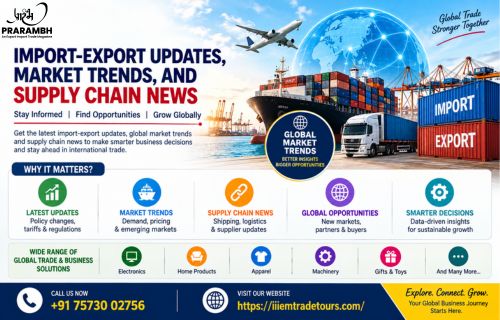
Import Export Updates are increasingly important for manufacturers, exporters, importers, wholesalers, distributors, sourcing professionals, and businesses operating across international markets. Changes in trade policies, shipping conditions, technology, buyer demand, tariffs, logistics, and supply chains can directly affect business costs and international growth.
In 2026, international trade continues to be shaped by supply-chain diversification, digitalization, Artificial Intelligence (AI), changing sourcing strategies, sustainability requirements, and evolving global demand.
Businesses that regularly monitor import export news, global market trends, and supply chain news can make better sourcing decisions, identify emerging opportunities, manage risks, and respond faster to changes in international markets.
This guide explores the key developments businesses should monitor when planning their global trade strategies.
What Are Import Export Updates?
Import Export Updates cover important developments affecting the international movement of goods and services.
They can include changes in:
- Import and export regulations
- Customs procedures
- Tariffs and duties
- International shipping
- Trade agreements
- Product compliance requirements
- Freight costs
- Supply-chain conditions
- International buyer demand
- Export documentation
- Digital trade systems
- Global sourcing strategies
Monitoring these developments helps companies make informed decisions before entering or expanding in international markets.
Why Import Export News Matters for Global Businesses
International markets can change quickly. A new regulation, shipping disruption, tariff change, or change in customer demand can affect an entire import-export strategy.
Businesses should therefore follow reliable Import Export News to understand what is happening across their target markets.
Regular monitoring can help businesses:
- Identify new export opportunities
- Anticipate potential supply-chain disruptions
- Understand international buyer demand
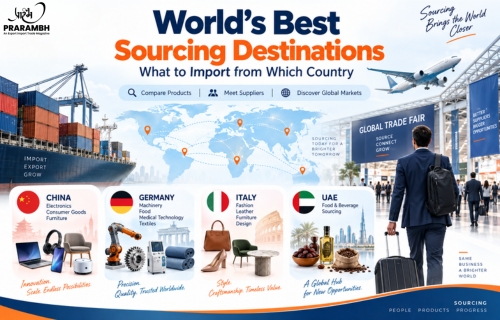
- Evaluate sourcing destinations
- Prepare for regulatory changes
- Improve logistics planning
- Manage import and export costs
- Identify emerging markets
For exporters and importers, timely information can become an important competitive advantage.
Key Global Trade Trends Businesses Should Watch in 2026
1. Supply Chain Diversification Is Becoming More Important
One of the major Global Trade Trends is the continued diversification of supply chains.
Instead of depending heavily on one country, manufacturer, or logistics route, businesses are increasingly evaluating multiple suppliers and sourcing destinations.
Supply-chain diversification can help companies:
- Reduce sourcing risks
- Improve business continuity
- Compare manufacturing costs
- Increase supplier flexibility
- Manage unexpected disruptions
- Improve negotiating power
A diversified sourcing strategy can make an import export business more resilient.
2. Global Sourcing Strategies Are Changing
Global sourcing is no longer focused only on finding the lowest price.
Businesses increasingly consider:
- Manufacturing capability
- Product quality
- Minimum order quantities
- Supplier reliability
- Compliance requirements
- Lead times
- Customization capabilities
- Logistics infrastructure
- Communication
- Total landed cost
Successful sourcing therefore requires businesses to evaluate the complete supplier relationship rather than only the product price.
Global Market Trends Creating New Trade Opportunities
Understanding Global Market Trends helps exporters determine where future demand may emerge.
Several industries continue to attract international business interest, including:
Healthcare and Medical Supplies
Demand for healthcare products, medical consumables, infection-control products, medical technology, and hospital supplies creates opportunities across international markets.
Beauty and Wellness
Salon, spa, personal care, wellness, and beauty-related products continue to support cross-border business opportunities.
Manufacturing and Industrial Products
Machinery, components, manufacturing equipment, automation technologies, and industrial products remain important categories in international commerce.
Renewable Energy
Solar technology, batteries, energy-management products, and clean-energy solutions continue to influence global sourcing.
Electronics and Smart Products
Connected devices, electronics, smart appliances, automation solutions, and technology products remain significant areas of international trade.
Supply Chain News: What Businesses Need to Monitor
Supply Chain News can have an immediate impact on product availability, shipping schedules, inventory, and profitability.
Businesses should monitor several areas closely.
Freight and Shipping Conditions
Changes in ocean freight, air cargo capacity, port congestion, fuel costs, and shipping routes can influence the total cost of international transactions.
Supplier Lead Times
Manufacturing delays can affect inventory planning and customer commitments.
Port and Customs Developments
Customs procedures and port conditions can influence clearance and delivery schedules.
Inventory Availability
Businesses should balance inventory levels against changing demand and transportation risks.
Geopolitical Developments
International events can affect trade routes, sourcing strategies, regulations, and logistics.
How Artificial Intelligence Is Transforming Import Export Business
Artificial Intelligence is becoming increasingly relevant to international trade.
Businesses can use AI-supported tools for:
- Market research
- Demand forecasting
- Supplier research
- Product analysis
- Competitor monitoring
- Inventory forecasting
- Logistics planning
- Document processing
- Customer communication
- Risk identification
AI can help businesses process large amounts of information faster, but important commercial and compliance decisions should still be verified using reliable sources and professional expertise.
Digital Transformation in International Trade
International trade is becoming increasingly digital.
Businesses are adopting:
- Electronic trade documentation
- Digital customs platforms
- Cloud-based inventory systems
- Online procurement platforms
- B2B marketplaces
- Digital payment systems
- Shipment tracking
- Supply-chain analytics
Digitalization can improve transparency, reduce administrative workload, and help businesses monitor international transactions more effectively.
International Trade Fairs and Global Market Discovery
Trade exhibitions remain useful for businesses researching international markets.
Major international exhibitions can help importers and exporters:
- Meet manufacturers
- Compare suppliers
- Discover new products
- Understand industry trends
- Build buyer relationships
- Explore new sourcing destinations
- Evaluate competitors
- Develop distribution partnerships
For B2B companies, combining digital market research with face-to-face networking can create a stronger international business strategy.
Importance of International Buyer Research
Finding an international buyer is only one part of export growth.
Businesses should understand:
- Buyer requirements
- Target-country regulations
- Product demand
- Price expectations
- Packaging requirements
- Distribution channels
- Competitor positioning
- Cultural differences
Better buyer research helps exporters develop offers that match the needs of specific international markets.
Import Export Regulations and Compliance
Compliance remains an essential part of international trade.
Depending on the product and destination, businesses may need to consider:
- Customs documentation
- Product certifications
- Import licenses
- Export licenses
- Country-of-origin requirements
- Product labeling
- Packaging standards
- Safety requirements
- Tax and duty obligations
- Restricted-product regulations
Requirements vary by product and country, so businesses should verify current regulations before shipping.
Global Supply Chain Risk Management
A strong Global Supply Chain strategy should include risk management.
Businesses can reduce exposure by:
Using Multiple Suppliers
Avoid unnecessary dependence on a single manufacturer.
Maintaining Appropriate Inventory
Safety stock can provide protection against unexpected delays, although the right level depends on the business and product.
Tracking Shipments
Real-time logistics visibility helps businesses identify delays earlier.
Reviewing Supplier Performance
Evaluate quality, lead times, communication, and consistency.
Monitoring International Developments
Follow relevant economic, regulatory, logistics, and geopolitical developments.
Sustainability in Global Trade and Supply Chains
Sustainability continues to influence international procurement decisions.
Companies are paying greater attention to:
- Responsible sourcing
- Sustainable packaging
- Waste reduction
- Energy efficiency
- Supply-chain transparency
- Environmental compliance
- Resource-efficient manufacturing
For some markets and industries, demonstrating responsible manufacturing practices can also strengthen supplier credibility.
How Importers Can Respond to Changing Market Trends
Importers should regularly:
- Research supplier markets
- Compare total landed costs
- Evaluate supplier reliability
- Monitor freight conditions
- Understand customs requirements
- Diversify sourcing options
- Negotiate clear commercial terms
- Inspect product quality
- Track currency movements
- Review market demand
The objective is not simply to import at the lowest price but to build a reliable and commercially sustainable sourcing system.
How Exporters Can Identify Global Trade Opportunities
Exporters can improve international growth by:
- Researching high-potential countries
- Understanding buyer requirements
- Monitoring import data
- Participating in relevant trade fairs
- Developing export-ready catalogs
- Improving online visibility
- Building distributor networks
- Maintaining international compliance
- Offering appropriate customization
- Following up consistently with prospects
Combining market intelligence with strong product positioning can improve export readiness.
Future of Import Export Business
The future of Import Export Business is expected to become more connected, technology-driven, and data-focused.
Important areas to watch include:
- AI-powered trade intelligence
- Supply-chain automation
- Smart logistics
- Digital customs processes
- Cross-border eCommerce
- Predictive analytics
- Sustainable sourcing
- Supplier diversification
- Digital B2B marketplaces
- Real-time shipment visibility
Businesses that continuously learn and adapt will be better positioned to respond to changes in global commerce.
Conclusion
Import Export Updates, Market Trends, and Supply Chain News provide businesses with valuable information for navigating international markets.
Manufacturers, exporters, importers, wholesalers, and distributors should regularly monitor global trade trends, international trade developments, global market trends, and supply chain news before making sourcing or expansion decisions.
The strongest international businesses do more than react to changes. They use market intelligence, supplier diversification, technology, compliance, and strategic planning to prepare for them.
As international commerce continues to evolve, businesses that combine reliable information with disciplined decision-making can identify opportunities earlier, manage risks more effectively, and build stronger global operations.
Frequently Asked Questions (FAQs)
1. What are Import Export Updates?
Import Export Updates are developments related to international trade, including customs regulations, tariffs, shipping conditions, trade policies, market demand, documentation, and supply chains.
2. Why should businesses follow Import Export News?
Following Import Export News helps companies identify opportunities, anticipate risks, monitor regulatory changes, and make better international business decisions.
3. What are the major Global Trade Trends in 2026?
Important trends include supply-chain diversification, AI adoption, digital trade, sustainable sourcing, smarter logistics, cross-border eCommerce, and changing global sourcing strategies.
4. Why is Supply Chain News important for importers?
Supply-chain developments can affect freight costs, delivery schedules, inventory availability, supplier lead times, and overall import profitability.
5. How can exporters identify new international markets?
Exporters can study trade data, buyer demand, competitors, regulations, industry reports, trade fairs, and country-specific market opportunities.
6. How is AI being used in Import Export Business?
AI can support market research, demand forecasting, supplier analysis, inventory planning, logistics optimization, documentation, and business intelligence.
7. What is Global Supply Chain Diversification?
Global Supply Chain Diversification means using multiple suppliers, manufacturing locations, or logistics routes to reduce dependency and improve resilience.
8. What should importers check before choosing an overseas supplier?
Importers should evaluate supplier credibility, product quality, pricing, manufacturing capacity, certifications, lead times, communication, compliance, and total landed cost.
9. How do International Trade Fairs help businesses?
Trade fairs allow companies to meet buyers and suppliers, compare products, study competitors, discover market trends, negotiate opportunities, and build international relationships.
10. What is the future of Global Trade?
The future of Global Trade is likely to be increasingly influenced by AI, automation, digital trade systems, sustainable sourcing, smart logistics, supply-chain diversification, and data-driven international business decisions.