
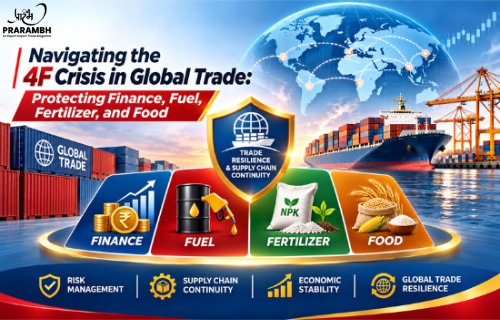
In an era defined by geopolitical fragmentation, weaponized supply chains, and regional conflicts, External Affairs Minister (EAM) Dr. S. Jaishankar recently delivered a sobering assessment of the global economy. Addressing international forums and media outlets, he cautioned against the escalating threat of the “4Fs”—Finance, Fuel, Fertilizer, and Food. Far from being isolated economic variables, these four pillars form an interconnected domino chain capable of destabilizing entire regions, particularly developing economies across the Global South.
For India, positioned as a rapidly growing major economy and a voice for the developing world, this warning is both a strategic alert and a call to calibrated action. As global commerce shifts from efficiency-driven globalization to resilience-driven regionalization, New Delhi and Indian enterprises must navigate international trade with heightened caution, strategic autonomy, and proactive risk management.
Understanding the 4Fs: The Interconnected Domino Effect
To grasp the gravity of Dr. Jaishankar’s warning, policymakers, business leaders, and citizens must understand how a shock in one sector triggers cascading failures across the other three.
- Fuel (Energy Security): Modern global commerce runs on uninterrupted energy flows. Geopolitical conflicts, maritime chokepoints, and unilateral sanctions immediately disrupt crude oil and natural gas supplies. Because India imports a massive share of its crude oil requirements, sustained volatility in global energy markets directly inflates the national import bill, widens the current account deficit, and drives imported inflation across transportation, aviation, and manufacturing.
- Fertilizer (Agricultural Inputs): The link between fuel and fertilizer is direct and unforgiving. Natural gas is a primary feedstock for manufacturing nitrogenous fertilizers such as urea. When energy prices surge or maritime shipping lanes are compromised, global fertilizer production contracts and procurement costs skyrocket. Given India’s reliance on imports for key fertilizers and raw materials like rock phosphate and potash, supply bottlenecks threaten agricultural productivity and strain government subsidy budgets.
- Food (Domestic and Global Stability): Expensive fuel and scarce fertilizers inevitably translate into higher cultivation, harvesting, and logistics costs. Combined with climate-induced weather disruptions, these input shocks drive up food inflation. While India maintains robust domestic grain reserves, global food shortages create export pressures, price volatility, and socioeconomic distress across neighboring and partner nations.
- Finance (Capital Flows and Currency Stability): Geopolitical instability triggers a global “flight to safety,” prompting institutional investors to pull capital out of emerging markets and park funds in safe-haven assets. Tighter global monetary conditions raise borrowing costs, weaken emerging-market currencies against the US dollar, and make dollar-denominated imports—specifically fuel, fertilizer, and food—even more expensive.
Implications for Global Trade
The convergence of the 4F crisis is fundamentally rewriting the rules of international commerce. First, supply chain de-risking is replacing pure cost optimization. Multinational corporations and sovereign nations are moving away from single-source dependencies toward “friend-shoring” and regionalized manufacturing hubs.
Second, trade protectionism and resource nationalism are rising. Countries facing domestic shortages in food, energy, or critical minerals are increasingly imposing export bans, quotas, and punitive tariffs, fragmenting the multilateral trading system governed by the World Trade Organization (WTO).
Third, financial and logistical friction is increasing. Weaponized financial networks, secondary sanctions, elevated maritime insurance premiums, and disrupted shipping corridors mean that moving goods across borders is slower, costlier, and fraught with compliance risks. Global trade is no longer purely commercial; it is deeply geopolitical.
How India Should Navigate International Trade Cautiously
While India enjoys stronger macroeconomic buffers—such as substantial foreign exchange reserves and resilient domestic consumption—than many developing economies, complacency is not an option. To shield the economy from 4F shocks, India’s trade strategy must rest on five pillars of caution and foresight:
- Diversifying Import Sources: India must avoid over-reliance on any single geographic corridor for crude oil, liquefied natural gas (LNG), fertilizers, and edible oils. Securing long-term bilateral supply contracts across West Asia, Africa, Latin America, and Eurasia will cushion the economy against localized conflicts.
- Expanding Rupee-Denominated Trade Settlements: Over-dependence on a single reserve currency exposes Indian trade to external monetary tightening and sanctions. Operationalizing bilateral currency swap agreements and Special Rupee Vostro Accounts with key trading partners reduces foreign exchange vulnerability and lowers transaction costs.
- Accelerating Domestic Self-Reliance (Atmanirbharta) in Critical Inputs: Long-term resilience requires reducing import intensity. Scaling up nano-fertilizers, green hydrogen, biofuels, domestic oilseed production, and renewable energy storage directly insulates India from external price spikes.
- Calibrating Export Controls and Buffer Stocks: India must balance its role as a reliable global supplier with domestic food and price security. Dynamic monitoring of buffer stocks and predictable, transparent agricultural trade policies prevent domestic inflation while preserving India’s credibility as a trusted trade partner.
- Pursuing Balanced Free Trade Agreements (FTAs): As India negotiates trade pacts with major economies and regional blocs, agreements must safeguard domestic agriculture, MSMEs, and strategic manufacturing while securing preferential market access and supply chain commitments for critical raw materials.
Conclusion
EAM Dr. S. Jaishankar’s warning on the 4Fs—Finance, Fuel, Fertilizer, and Food—serves as a vital reality check for policymakers and industry stakeholders alike. In an unpredictable world where geopolitical tremors rapidly morph into economic shocks, no nation is entirely immune. For India, the path forward lies in strategic vigilance: diversifying supply chains, strengthening domestic production capacities, de-risking financial settlements, and practicing pragmatic diplomacy. By treating economic security as an integral component of national security, India can protect its growth trajectory while continuing to champion stability for the broader Global South.
Frequently Asked Questions (FAQs)
What are the “4Fs” highlighted by EAM Dr. S. Jaishankar? The 4Fs refer to Finance, Fuel, Fertilizer, and Food—four critical pillars of the global economy that are currently experiencing severe interconnected stress due to geopolitical conflicts and supply chain disruptions.
How do the 4Fs impact each other? They operate as a domino chain: geopolitical conflicts raise Fuel prices; higher energy costs make Fertilizer production expensive; costlier fertilizers and transport drive up Food prices; and global uncertainty tighten Finance, weakening currencies and increasing import bills.
Why is India vulnerable to the 4F crisis despite strong economic growth? While India has strong foreign exchange reserves and domestic food production, it remains heavily dependent on imports for crude oil, natural gas, and key fertilizer raw materials, exposing the economy to imported inflation and currency fluctuations.
How can Indian businesses and policymakers mitigate 4F trade risks? India can mitigate these risks by diversifying import suppliers, promoting local currency trade settlements, investing in domestic alternatives like green energy and nano-fertilizers, and maintaining robust strategic buffer stocks.
For further context on how External Affairs Minister S. Jaishankar framed these interconnected global pressures during his recent address, you can watch EAM S. Jaishankar Warns Of Global 4F Strain, which outlines the diplomatic and economic dimensions of the crisis.