
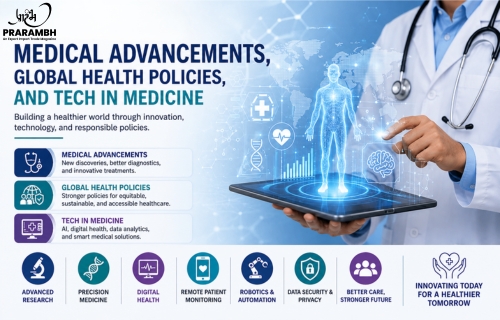
The global healthcare industry is entering a new era shaped by medical advancements, global health policies, and technology in medicine. Artificial intelligence (AI), digital health platforms, precision medicine, connected medical devices, advanced diagnostics, robotics, and health-data technologies are changing how healthcare systems approach prevention, diagnosis, treatment, and patient management.
At the same time, governments and healthcare organizations face an equally important challenge: ensuring that innovation is safe, ethical, accessible, evidence-based, and beneficial to patients.
In 2026, this balance between healthcare innovation and responsible healthcare policy is becoming increasingly important. The World Health Organization (WHO), for example, has extended its Global Strategy on Digital Health through 2027 while work progresses on a successor strategy for 2028–2033.
This article explores the major medical technology trends in 2026, changes in global health policy, AI-powered healthcare, digital medicine, precision medicine, and the innovations likely to influence the future of healthcare worldwide.
What Are the Most Important Medical Advancements in 2026?
Medical Advancements 2026 extend far beyond new medicines or hospital equipment. Innovation increasingly combines medicine, biotechnology, software, data science, engineering, and artificial intelligence.
Important areas include:
- Artificial intelligence in healthcare
- Precision and personalized medicine
- Digital health platforms
- Remote patient monitoring
- Advanced medical imaging
- Connected medical devices
- Robotics and automation
- Genomics
- Clinical decision-support software
- Predictive healthcare analytics
- Wearable health technology
- Telemedicine
- Smart hospital systems
Together, these technologies are helping healthcare move toward more connected, data-informed, personalized, and potentially preventive models of care.
1. AI in Healthcare Is Transforming Modern Medicine
AI in Healthcare is one of the most important areas of medical technology development.
AI-powered systems can help analyze large volumes of clinical information and support tasks such as:
- Medical image analysis
- Clinical decision support
- Disease-risk prediction
- Patient monitoring
- Administrative automation
- Research and drug development
- Health-data analysis
- Workflow optimization
AI is also moving into health policy. WHO reported in 2026 that AI can support evidence-informed policy through data integration, predictive modelling, scenario simulation, and adaptive feedback, while stressing that it should augment rather than replace human judgment.
Responsible AI Is Becoming Just as Important as AI Innovation
Healthcare AI introduces significant questions around:
- Patient privacy
- Algorithmic bias
- Transparency
- Clinical validation
- Data quality
- Cybersecurity
- Human oversight
- Accountability
- Equitable access
WHO has highlighted gaps between AI adoption and governance, reinforcing the importance of responsible frameworks as healthcare organizations deploy AI technologies.
The future of AI-powered healthcare therefore depends not only on more powerful algorithms but also on trustworthy, transparent, clinically appropriate AI.
2. Digital Health Technology Is Connecting Patients and Healthcare Systems
Digital Health Technology includes tools and systems that use digital information to improve healthcare delivery and management.
Examples include:
- Electronic health records
- Mobile health applications
- Telemedicine
- Remote patient monitoring
- Digital therapeutics
- Connected diagnostic devices
- Patient portals
- Wearable devices
- Health-data platforms
WHO states that digital health can contribute to more efficient, sustainable, affordable, and equitable health services when implemented appropriately.
Why Digital Health Matters Globally
Digital health can potentially help healthcare systems:
- Extend access to services
- Improve communication
- Support remote care
- Connect health information
- Improve clinical workflows
- Strengthen health-system planning
- Support faster decision-making
However, technology alone does not solve healthcare challenges. Digital infrastructure, interoperability, workforce training, governance, accessibility, and data protection all influence whether digital health succeeds.
3. Precision Medicine Is Moving Healthcare Toward Personalized Care
Traditional medicine often applies broadly standardized treatments. Precision Medicine aims to use relevant individual information to better guide prevention, diagnosis, and treatment.
This can include:
- Genomic information
- Molecular information
- Clinical history
- Diagnostic results
- Lifestyle factors
- Environmental factors
- Other health data
In May 2026, the World Health Assembly endorsed a resolution on precision medicine that emphasizes targeted, personalized, and equitable care. WHO notes that precision approaches can potentially improve outcomes across areas ranging from cancer and rare diseases to infectious and noncommunicable diseases when integrated responsibly.
Why Precision Medicine Is Important
Precision medicine may help healthcare professionals:
- Better understand disease differences
- Select more appropriate interventions
- Identify certain risks earlier
- Improve treatment targeting
- Reduce unnecessary treatment in appropriate cases
- Support research into complex diseases
Its global expansion, however, depends on infrastructure, evidence, affordability, ethical safeguards, and equitable access.
4. Remote Patient Monitoring Is Expanding Healthcare Beyond Hospitals
Healthcare is increasingly moving beyond traditional hospitals and clinics.
Remote Patient Monitoring (RPM) uses connected technologies to collect certain health information outside conventional healthcare facilities.
Depending on the clinical application, systems may monitor:
- Heart rate
- Blood pressure
- Blood glucose
- Oxygen saturation
- Activity
- Sleep patterns
- Other relevant health indicators
Remote monitoring can support continuity of care, especially when integrated with appropriate clinical workflows.
This is particularly relevant for chronic disease management, post-treatment monitoring, elderly care, and healthcare systems serving geographically dispersed populations.
5. Wearable Medical Technology Is Creating Continuous Health Data
Wearable devices are evolving from consumer fitness accessories toward increasingly sophisticated health-monitoring technologies.
Examples can include:
- Smartwatches
- ECG-enabled wearables
- Continuous glucose monitors
- Heart-rate monitors
- Biosensors
- Smart patches
- Sleep-monitoring devices
The broader opportunity is continuous health intelligence.
Instead of relying only on occasional measurements during appointments, healthcare professionals may have access—where clinically appropriate and with proper consent—to longer-term health patterns.
However, consumer wellness devices and regulated medical devices are not interchangeable. Their intended use, evidence, accuracy, and regulatory status matter.
6. Smart Medical Devices Are Changing Healthcare Delivery
Modern medical devices increasingly combine physical hardware with software, connectivity, sensors, and data analysis.
Examples include:
- Smart diagnostic equipment
- Connected monitoring systems
- AI-enabled imaging technologies
- Automated medication systems
- Smart surgical equipment
- Connected hospital devices
This convergence between medical devices and software creates new possibilities but also introduces cybersecurity and lifecycle-management challenges.
The U.S. FDA maintains dedicated digital-health guidance covering areas such as clinical decision-support software, AI-enabled device software, cybersecurity, and remote data acquisition.
7. Clinical Decision Support Technology Is Evolving
Clinical Decision Support (CDS) systems provide clinicians with information that may help inform healthcare decisions.
Potential applications include:
- Reviewing patient information
- Highlighting relevant clinical factors
- Supporting medication decisions
- Identifying potential risks
- Providing evidence-based information
- Assisting diagnostic workflows
In January 2026, the FDA issued final guidance clarifying its approach to certain clinical decision-support software functions and when such functions may fall within or outside medical-device regulation in the United States.
This illustrates a broader global trend: as software becomes increasingly embedded in medicine, regulators are developing more detailed frameworks around its use.
8. Robotics and Automation Are Supporting Modern Healthcare
Robotics and automation are increasingly being explored or used across healthcare environments.
Applications can include:
Surgical Assistance
Robotic systems can support surgeons during certain procedures.
Pharmacy Automation
Automated systems can assist with medication handling and inventory workflows.
Laboratory Automation
Robotics can help laboratories process large numbers of samples.
Hospital Logistics
Automated systems can support movement of supplies and materials.
Rehabilitation
Robotic technologies can assist selected rehabilitation programs.
The objective is not simply replacing manual work. Well-designed automation can allow healthcare professionals to focus more attention on tasks requiring clinical judgment and human interaction.
9. Global Health Policies Are Adapting to Medical Technology
Rapid innovation creates a major policy question:
How can healthcare systems encourage useful innovation while protecting patients?
Modern Global Health Policies increasingly need to address:
- AI governance
- Digital health
- Medical-device regulation
- Patient-data privacy
- Cybersecurity
- Interoperability
- Health equity
- Clinical evidence
- Ethical technology deployment
- Cross-border health-data issues
WHO’s Global Strategy on Digital Health has been extended through 2027, and the organization is developing the next strategy for 2028–2033.
This reflects the growing role of digital technologies in national and international healthcare strategies.
10. Cybersecurity Is Becoming a Patient-Safety Issue
As medical systems become more connected, healthcare cybersecurity becomes increasingly important.
Connected healthcare environments can include:
- Medical devices
- Hospital information systems
- Cloud platforms
- Electronic health records
- Remote monitoring systems
- Mobile health applications
Security failures can affect privacy, operations, and potentially patient safety.
Regulators such as the FDA now incorporate cybersecurity considerations into guidance for medical devices, including recommendations related to device design and premarket submissions.
For healthcare technology developers, cybersecurity should increasingly be considered throughout the product lifecycle rather than only after deployment.
11. Good Machine Learning Practices for Medical Devices
AI-powered medical devices require more than an accurate algorithm.
Developers must consider the entire lifecycle, including:
- Data quality
- Representative datasets
- Testing
- Human-AI interaction
- Performance monitoring
- Transparency
- Risk management
International regulators have developed Good Machine Learning Practice (GMLP) principles intended to support safe, effective, high-quality AI/ML medical-device development across the total product lifecycle.
This is likely to become increasingly relevant as AI-enabled medical technologies expand internationally.
Global Healthcare Trends Across Major Markets
Healthcare innovation does not develop identically in every region.
United States
The U.S. remains an important market for digital health, medical devices, biotechnology, AI-enabled healthcare, and pharmaceutical innovation. Regulatory developments from the FDA also influence global medical-technology companies.
Europe
European healthcare markets continue to focus on digital transformation, medical-device regulation, data governance, patient safety, and responsible AI adoption.
India
India has significant opportunities across digital health, pharmaceuticals, medical-device manufacturing, hospital infrastructure, telemedicine, and healthcare technology.
Middle East
Countries across the Middle East are investing in healthcare infrastructure, digital transformation, advanced hospitals, medical technology, and smart healthcare systems.
Asia-Pacific
Asia-Pacific markets are important for healthcare manufacturing, digital health, medical technology, biotechnology, and expanding healthcare demand.
These regional differences make GEO-focused healthcare content valuable for manufacturers, exporters, investors, technology companies, and healthcare professionals researching specific markets.
Medical Disposable Products Still Matter in a High-Tech Healthcare World
The rise of AI and advanced medical technology does not reduce the importance of essential healthcare products.
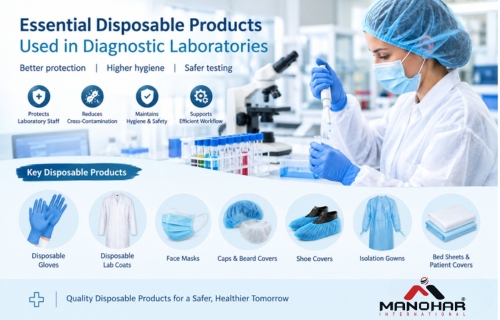
Modern healthcare facilities continue to rely on disposable products such as:
- Surgical gowns
- Isolation gowns
- Medical masks
- Surgical drapes
- Examination gloves
- Bouffant caps
- Shoe covers
- Disposable bed sheets
- Patient gowns
- Procedure kits
Advanced technology and fundamental infection-control practices work together.
A highly digital hospital still needs reliable physical products, hygiene systems, trained healthcare professionals, appropriate protocols, and dependable supply chains.
How Technology Is Improving Global Healthcare Supply Chains
Healthcare innovation also extends into manufacturing and logistics.
Technologies can support:
- Demand forecasting
- Inventory monitoring
- Manufacturing automation
- Quality-control systems
- Product traceability
- Warehouse management
- Procurement
- Shipment visibility
- Supplier evaluation
- Predictive maintenance
For healthcare manufacturers and suppliers, these capabilities can improve operational visibility and help build more resilient supply chains.
Challenges Facing Medical Technology Adoption
Despite its potential, Technology in Medicine faces several challenges.
Data Privacy
Healthcare information is highly sensitive and requires strong protection.
Affordability
Advanced technologies may initially be expensive for healthcare systems and patients.
Digital Divide
Not every community has equal access to connectivity, devices, or digital infrastructure.
Interoperability
Healthcare technologies need to exchange information safely and effectively.
Regulation
Innovation can develop faster than regulatory frameworks.
AI Bias
Poor or unrepresentative datasets can contribute to unreliable or inequitable outcomes.
Cybersecurity
Connected medical systems create new security risks.
Workforce Training
Healthcare professionals need appropriate training to use new technologies safely.
Addressing these challenges is essential for translating innovation into meaningful health improvements.
Future of Healthcare: What Comes Next?
The Future of Healthcare is likely to combine human expertise with increasingly sophisticated technology.
Areas to watch include:
- AI-assisted diagnostics
- Precision medicine
- Genomics
- Predictive analytics
- Connected medical devices
- Virtual care
- Remote monitoring
- Robotics
- Digital therapeutics
- Smart hospitals
- Automated laboratories
- Advanced biosensors
- Data-driven public health
The most successful healthcare systems will not necessarily be those with the most technology.
They will be those that deploy technology safely, equitably, responsibly, and where evidence shows that it improves healthcare.
Conclusion
Medical Advancements, Global Health Policies, and Technology in Medicine are increasingly interconnected.
AI, digital health, precision medicine, remote monitoring, connected devices, robotics, and healthcare data technologies offer significant opportunities to improve how healthcare is researched, delivered, and managed.
At the same time, global health policies must evolve to address safety, ethics, cybersecurity, privacy, clinical evidence, interoperability, and equitable access.
The future of healthcare therefore depends on more than technological innovation. It depends on combining medical science, responsible policy, skilled healthcare professionals, trustworthy technology, reliable healthcare products, and patient-centered care.
As healthcare continues its digital transformation, businesses, policymakers, manufacturers, researchers, and healthcare organizations that understand both medical innovation and global health policy will be better prepared for the next generation of medicine.
Frequently Asked Questions (FAQs)
1. What are the biggest medical advancements in 2026?
Major areas include AI in healthcare, precision medicine, digital health, remote patient monitoring, connected medical devices, genomics, robotics, clinical decision support, and advanced health-data technologies.
2. How is AI changing healthcare?
AI can support medical imaging, clinical decision-making, health-data analysis, workflow automation, research, risk prediction, and healthcare planning. Responsible human oversight remains essential.
3. What is digital health technology?
Digital health technology includes telemedicine, mobile health applications, electronic health records, connected devices, remote monitoring, digital therapeutics, and health-data platforms.
4. What is precision medicine?
Precision medicine uses clinical, genomic, molecular, and other relevant information to help tailor prevention, diagnosis, or treatment to individual characteristics.
5. Why are global health policies important for medical technology?
Policies help establish requirements and expectations around patient safety, evidence, privacy, cybersecurity, AI governance, medical-device regulation, and equitable access.
6. How are wearable technologies used in healthcare?
Wearables can collect information such as heart rate, activity, sleep, glucose, or other health indicators depending on the device and its intended use.
7. What role does robotics play in modern healthcare?
Robotics can support selected surgical procedures, rehabilitation, laboratory automation, pharmacy workflows, and hospital logistics.
8. What are the biggest challenges for healthcare technology?
Key challenges include cost, data privacy, cybersecurity, AI bias, regulatory complexity, interoperability, unequal access, and healthcare-worker training.
9. Will AI replace doctors and healthcare professionals?
AI is better understood as a tool that can augment healthcare professionals rather than a general replacement for clinical expertise. WHO similarly emphasizes the importance of human judgment and oversight in AI-supported health decisions.
10. What is the future of healthcare technology?
Healthcare technology is moving toward more connected, personalized, predictive, and data-driven care, with AI, precision medicine, smart medical devices, remote monitoring, genomics, and digital health expected to remain important areas of development.