

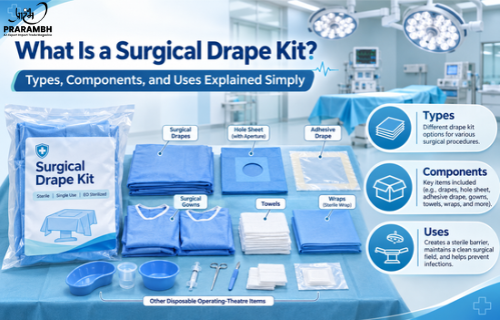
What Is a Surgical Drape Kit
During a surgical procedure, maintaining a sterile environment is extremely important. Hospitals and healthcare professionals use various disposable medical products to reduce the risk of contamination and maintain a controlled surgical area. One such essential product is a Surgical Drape Kit.
A surgical drape kit contains specially designed sterile coverings and accessories used to cover the patient, surgical area, instruments and surrounding surfaces during medical procedures.
These kits are designed to make surgical preparation more organized, convenient and efficient. However, the components of a surgical drape kit can differ depending on the type of surgery and medical requirement.
In this blog, we explain what a surgical drape kit is, its different types, components and uses in hospitals and operation theatres.
1. What Is a Surgical Drape Kit?
A surgical drape kit is a collection of sterile, single-use disposable drapes and related accessories used during surgical procedures.
Its primary purpose is to cover the patient and surrounding areas while creating a sterile field around the surgical site. This helps reduce exposure to microbial and other contamination during surgery.
Example: During an abdominal surgery, a surgical drape kit may contain a large patient drape with an opening for the surgical area, smaller utility drapes and other accessories required for preparation.
Surgical drape kits are commonly used in hospitals, operation theatres, surgical centers and specialized healthcare facilities.
2. What Are the Different Types of Surgical Drape Kits?
Surgical drape kits are available in different designs depending on the procedure and body area involved.
Some commonly used types include:
a. General Surgery Drape Kit
Used for routine surgical procedures involving different body areas. It generally contains patient drapes, utility drapes and other basic accessories.
b. C-section Drape Kit
These are designed for Caesarean section procedures. These kits may include specialized abdominal drapes and fluid collection pouches.
c. Orthopedic Drape Kit
Used for bone and joint surgeries. These drapes are designed to cover the patient and help isolate the surgical area.
d. Ophthalmic Drape Kit
Used during eye surgeries. These kits include specially designed drapes suitable for ophthalmic procedures.
e. Laparoscopic Drape Kit
Used during minimally invasive surgeries performed with a laparoscope. The drapes are designed to accommodate the equipment and access requirements of the procedure.
f. Urology Drape Kit
Designed for urological procedures and may include specialized drapes and fluid collection features.
3. What Are the Main Components of a Surgical Drape Kit?
The components of a surgical drape kit depend on its intended use. Common components include:
| Component | Purpose |
| Main surgical drape | Covers the patient and isolates the surgical area. |
| Fenestrated drape | Has an opening to expose the surgical site. |
| Utility drapes | Provide additional coverage around the procedure area. |
| Mayo stand cover | Covers the instrument stand. |
| Absorbent towels | Help manage moisture and fluids. |
| Adhesive drapes or strips | Help secure drapes in position. |
| Fluid collection pouch | Collects fluids during selected procedures. |
| Instrument covers | Cover selected equipment and accessories. |
Not every kit contains all these components. Hospitals can select standard or customized surgical drape kits according to their surgical requirements.
4. What Materials Are Used to Manufacture Surgical Drape Kits?
The material used in a surgical drape kit is important because it influences its strength, absorbency, and comfort and barrier performance.
Common materials include:
- SMS Non-Woven Fabric: Spunbond-Meltblown-Spunbond (SMS) is widely used in medical disposable products. It offers a combination of strength and barrier properties.
- Spunbond Non-Woven Fabric: Commonly used for lightweight disposable coverings and selected medical accessories.
- Absorbent Materials: Used in specific areas of drapes to help manage fluids during procedures.
- Polyethylene Film: Used in selected drapes and pouches to provide a fluid-resistant barrier.
Material selection depends on the intended surgical application and required product specifications.
5. Why Are Surgical Drape Kits Important in Hospitals?
Surgical drape kits play an important role in maintaining an organized and controlled surgical environment.
Their key benefits include:
- Support sterile field management: Help separate the surgical site from surrounding non-sterile areas.
- Convenient preparation: Provide multiple required components in one organized pack.
- Single-use convenience: Reduce the need to reprocess disposable drapes between procedures.
- Fluid management: Selected drapes include absorbent areas and collection pouches.
- Improved workflow: Help healthcare professionals prepare the operating area efficiently.
It is important to understand that surgical drapes are only one part of infection-prevention practices. They do not replace proper sterilization, skin preparation, hand hygiene or other operating theatre protocols.
6. What Should Hospitals Consider When Purchasing Surgical Drape Kits?
Hospitals, distributors and medical procurement teams should evaluate several factors before purchasing surgical drape kits.
- Material quality: Check fabric strength, absorbency and barrier performance.
- Sterility: Ensure products are supplied with appropriate validated sterilization and intact sterile packaging.
- Procedure suitability: Select kits designed for the intended surgical application.
- Component selection: Check whether all required accessories are included.
- Packaging: Ensure packaging protects the contents during storage and transportation.
- Supplier reliability: Choose manufacturers who can maintain consistent product quality and supply.
For bulk buyers, customized surgical drape kits can also help meet the specific requirements of different hospitals and surgical departments.
Conclusion: Choosing the Right Surgical Drape Kit Matters
A surgical drape kit is an important part of modern surgical preparation. It provides specialized coverings and accessories that help maintain the sterile field, manage fluids and organize the operating area.
From general surgery and orthopedics to ophthalmic procedures and C-sections, different surgical drape kits are designed to meet different medical requirements.
For hospitals, healthcare distributors and medical procurement professionals, selecting the right kit involves evaluating material quality, sterility, components and procedure suitability.
At Manohar International, we understand the importance of quality in healthcare disposable products. The right medical disposable products help healthcare facilities maintain organized procedures and support professional healthcare practices.
Frequently Asked Questions (FAQs)
- What is a surgical drape kit used for?
A surgical drape kit is used to cover the patient and surrounding areas during surgery, helping establish and maintain a sterile field around the surgical site.
- What are the common components of a surgical drape kit?
Common components include patient drapes, fenestrated drapes, utility towels, Mayo stand covers, adhesive strips and fluid collection pouches. The contents vary by procedure.
- Are surgical drape kits disposable?
Many surgical drape kits are designed for single use and supplied sterile. They should be discarded after use according to hospital waste-management procedures and product instructions.
- What is a fenestrated surgical drape?
A fenestrated surgical drape is a covering with a specially designed opening that exposes the area where the surgical procedure will take place.
- What materials are used in surgical drape kits?
Common materials include SMS non-woven fabric, spunbond non-woven fabric, absorbent materials and polyethylene film.
- What are the different types of surgical drape kits?
Common types include general surgery, C-section, orthopedic, ophthalmic, laparoscopic and urology drape kits.
- Can surgical drape kits be customized?
Yes. Manufacturers can offer customized kits with selected drapes and accessories depending on hospital requirements and the intended surgical procedure.