

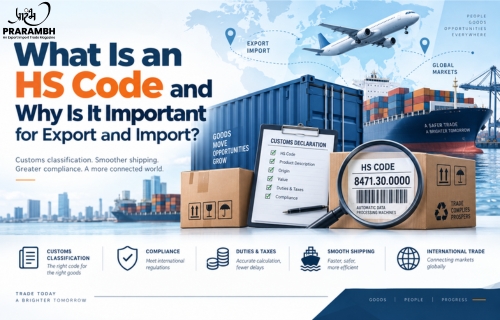
What Is an HS Code?
An HS Code (Harmonized System Code) is an internationally recognized numerical system used to classify products in international trade.
The Harmonized System (HS) is developed by the World Customs Organization (WCO). The first 6 digits are internationally standardized, while individual countries may add additional digits for their own customs and taxation requirements.
For example, in India, products are generally identified using an 8-digit ITC(HS) code for export and import purposes.
Why Is an HS Code Important?
An HS Code helps customs authorities, exporters, importers, freight forwarders and other trade stakeholders identify the exact product being traded.
Key Importance of HS Codes
- Customs Classification
Helps customs authorities classify products correctly. - Determines Import Duty and Taxes
The applicable customs duty, GST and other taxes may depend on the product’s classification. - Export-Import Documentation
HS Codes are used in documents such as commercial invoices, shipping bills, bills of entry and other trade documents. - Identifies Product-Specific Regulations
An HS Code can help determine whether a product requires licences, certificates, testing or other regulatory approvals. - Trade Statistics
Governments and international organizations use HS Codes to track import and export volumes and values. - Helps Find International Markets
Exporters can use HS Codes to research which countries import a particular product and identify potential markets. - Reduces Customs Delays
Correct classification can reduce errors, queries and delays during customs clearance. - Supports Trade Agreements
HS classification is important when checking preferential duties and benefits available under Free Trade Agreements (FTAs). - Improves Buyer-Seller Communication
Using the correct HS Code helps exporters and foreign buyers clearly identify the product being discussed. - Avoids Compliance Problems
Incorrect HS classification can result in incorrect duty payment, customs queries, penalties or shipment delays.
How to Find the Correct HS Code?
Before selecting an HS Code, an exporter should carefully check:
- Product description and composition
- Material or ingredients
- Product’s function and end use
- Processing or manufacturing method
- Product specifications
- Country-specific tariff classification
Do not select an HS Code only because it appears similar to your product. The correct classification should be verified using the applicable customs tariff and, where necessary, professional customs or classification advice.
Example of an HS Code
Suppose an Indian exporter wants to export turmeric powder. The product needs to be classified under the appropriate HS Code before shipment.
Example:
- Product: Turmeric powder
- HS Code: 091030
- Product category: Turmeric (including turmeric powder)
- Use: The code helps customs authorities identify the product and determine applicable duties and requirements.
In simple words: An HS Code works like a product identification number for international trade. It tells customs authorities what product is being imported or exported.
Conclusion
The HS Code is one of the most important identifiers in international trade. It affects customs classification, duties, documentation, regulations and trade statistics. For exporters and importers, selecting the correct HS Code at the beginning can help ensure smooth customs clearance, accurate pricing and better compliance.
FAQs
- What does HS Code stand for?
HS Code stands for Harmonized System Code, an internationally standardized system for classifying traded products.
- How many digits are in an HS Code?
The internationally standardized HS Code contains 6 digits. Countries may add more digits for their national tariff classification. India generally uses 8-digit ITC(HS) codes.
- Is the HS Code the same in every country?
The first six digits are generally harmonized internationally, but countries can use additional digits and national classifications. Therefore, the complete tariff code may differ between countries.
- Why is the HS Code important for exporters?
It helps determine product classification, applicable duties and regulations, and is required or used across several export and customs documents.
- Can the wrong HS Code cause problems?
Yes. Incorrect classification can lead to wrong duty calculation, customs queries, shipment delays, penalties or compliance issues. Exporters should verify the classification before shipping.