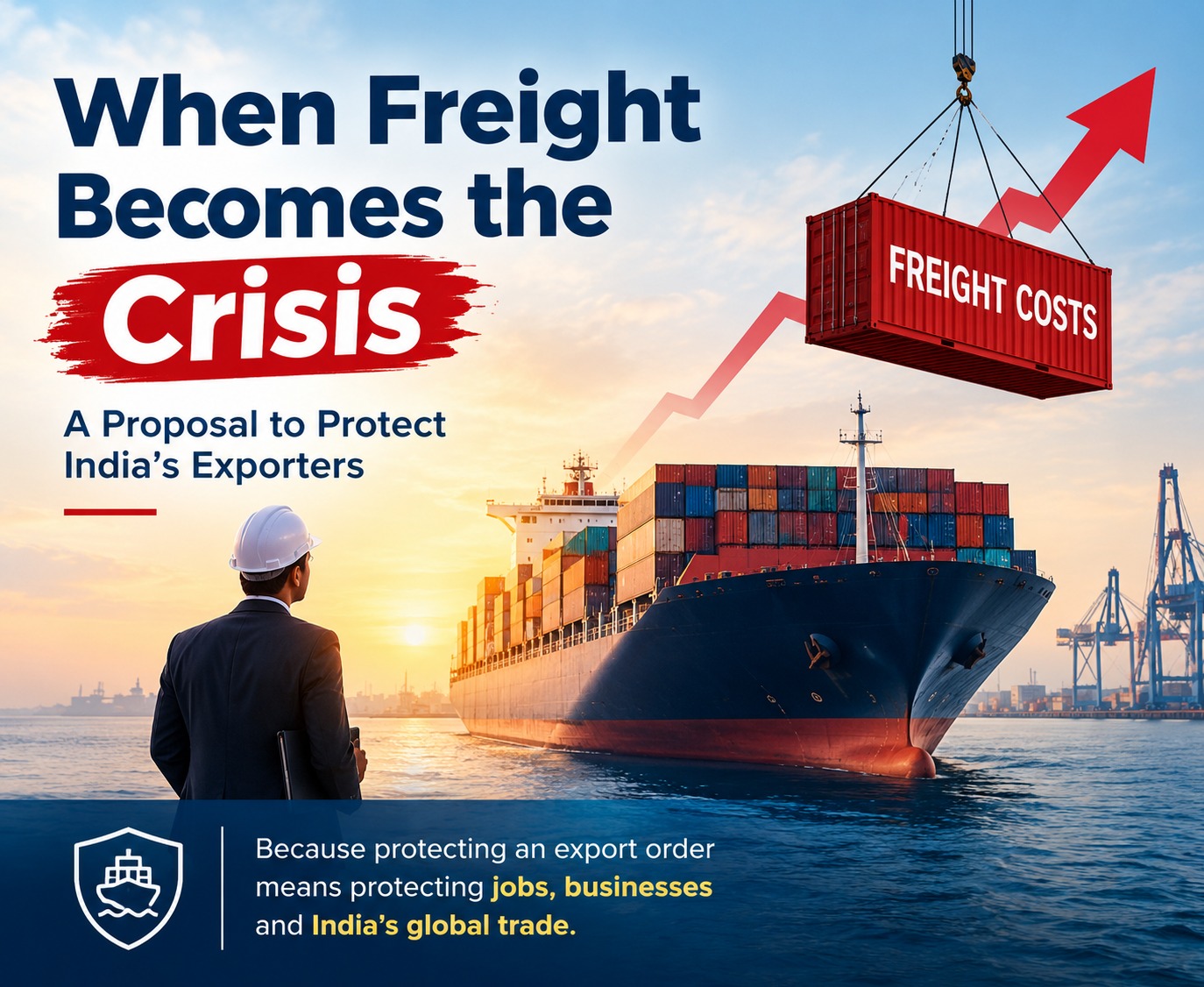
When Freight Becomes the Crisis: A Proposal to Protect India’s Exporters
Dipak Manohar
Dipak Manohar
International Trade Expert
September 17, 2026
India’s exporters do not need protection from competition.They need protection from extraordinary circumstances beyond their control.
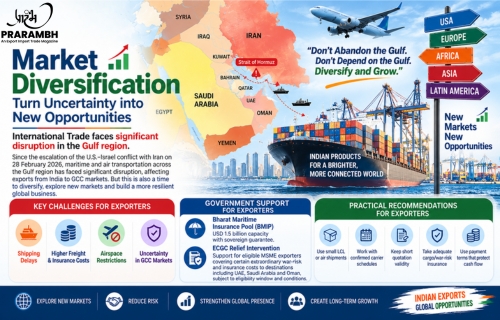
A sudden geopolitical or logistics disruption can increase freight by ₹40,000–₹1 lakh per container. For an MSME exporter, this can wipe out the margin on an otherwise viable export order—and may even lead to loss of the overseas buyer.
My Proposal: Export Freight Resilience Rebate (EFRR)
The principle is simple:
Normal freight remains the exporter’s responsibility. Government support should apply only to the extraordinary freight burden caused by an officially recognised external disruption.
EFRR — At a Glance
Article content
Principle
Normal business risk remains with the exporter; extraordinary external disruption receives temporary support
Example
Normal freight: ₹1,00,000
Actual freight: ₹1,50,000
Extraordinary burden: ₹50,000 50%
Support: ₹25,000
This is not a blanket freight subsidy. It is a targeted mechanism to help viable Indian export orders survive extraordinary external shocks.
Protecting an export order can help protect foreign exchange, MSME working capital, jobs, manufacturing capacity and long-term global buyers.
India needs an Export Logistics Shock Absorber that can respond when extraordinary global events threaten otherwise viable Indian exports.
We should not protect exporters from competition. We should exporters from extraordinary circumstances beyond their control.
That is export resilience.
Policy perspective by the author. Proposed figures and rebate rates are indicative recommendations and require validation through Government data and stakeholder consultation.
Author – Dipak Sudhir Manohar Founder & Managing Director, iiiEM | Manohar International